

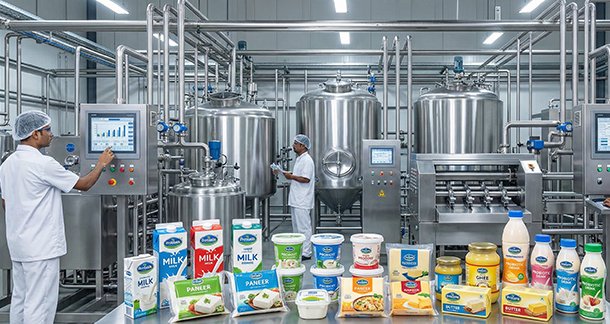
The dairy sector is an important part of the food industry, converting raw milk into a wide variety of safe, nutritious, and marketable products. In dairy technology, value addition and standardization play a crucial role in improving product quality, shelf life, and consumer acceptance. These practices also help reduce losses, increase profitability, and ensure uniformity in dairy products.
Concept of Value Addition in Dairy
Value addition in dairy technology refers to improving the quality and usefulness of milk by applying scientific processing techniques. Since raw milk is highly perishable, converting it into products such as curd, paneer, cheese, butter, ghee, ice cream, and fermented dairy products increases its storage stability and economic value. Value-added dairy products also meet changing consumer preferences for taste, convenience, and nutrition.
Technological Approaches for Value Addition
Modern dairy processing uses advanced technologies to develop innovative products. Techniques such as pasteurization, UHT processing, membrane filtration, spray drying, and microencapsulation help improve product safety, shelf life, and nutritional quality. The development of functional dairy products like probiotic yogurt, fortified milk, lactose-free milk, and protein-enriched beverages is a major outcome of value addition in dairy technology.
Role of Packaging in Value Addition
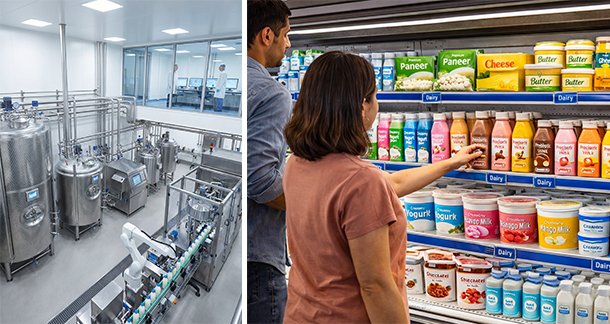
Packaging is an important aspect of value addition in dairy products. Aseptic packaging, modified atmosphere packaging, and hygienic containers help protect products from contamination and extend shelf life. Attractive and informative packaging also increases consumer appeal and market competitiveness, especially in the organized dairy sector.
Concept of Standardization in Dairy Technology
Standardization is the process of adjusting the composition of milk and milk products to achieve uniform quality. It involves controlling fat, solids-not-fat (SNF), and other components to meet prescribed standards. Standardization is necessary because the composition of raw milk varies due to factors such as breed, feed, season, and stage of lactation.
Importance of Standardization in Dairy Processing
Standardization ensures consistency in products such as toned milk, double toned milk, standardized milk, and full-cream milk. It helps maintain uniform taste, texture, and nutritional value in large-scale production. Regulatory authorities such as FSSAI and Codex Alimentarius set standards for composition, microbial quality, and labeling, which must be followed to ensure food safety and legal compliance.
Quality Control and Safety Aspects
Standardization supports effective quality control during processing operations like pasteurization, homogenization, and fermentation. The use of quality assurance systems such as HACCP, GMP, and ISO standards helps prevent contamination and ensures hygienic manufacturing practices. This improves consumer confidence and acceptance of dairy products.
Conclusion
Value addition and standardization are essential components of dairy technology. While value addition enhances product diversity, nutritional quality, and profitability, standardization ensures safety, uniformity, and regulatory compliance. Together, they strengthen the dairy value chain and support sustainable growth of the dairy industry. With increasing demand for high-quality and functional dairy products, the role of food technologists in these areas continues to grow.
References
- Walstra, P., Wouters, J. T. M., & Geurts, T. J. (2006). Dairy science and technology (2nd ed.). CRC Press.
- Fox, P. F., & McSweeney, P. L. H. (2017). Advanced dairy chemistry: Volume 1A – Proteins: Basic aspects (4th ed.). Springer.
- Tamime, A. Y., & Robinson, R. K. (2007). Yoghurt: Science and technology (3rd ed.). Woodhead Publishing.
- Singh, H., & Bennett, R. J. (2014). Milk and dairy products: Technology and management. CBS Publishers & Distributors.
- Food Safety and Standards Authority of India. (2011). Food safety and standards (food products standards and food additives) regulations. FSSAI.
- Codex Alimentarius Commission. (2011). Codex standards for milk and milk products. FAO/WHO.
- Early, R. (1998). The technology of dairy products (2nd ed.). Springer.
- Chandan, R. C., Kilara, A., & Shah, N. P. (2016). Dairy processing and quality assurance. Wiley-Blackwell.
About the Authors:
Dr. Ruchi Verma* and Dr. Asha Kumari
Assistant Professor
Department of Food Processing and Technology
Gautam Buddha University, Greater Noida-201312
*Corresponding mail Id: ruchiverma0715@gmail.com

