
When we talk about healthy food, we usually talk about nutrients—protein, fibre, vitamins, minerals, sugar or calories. Packaging rarely gets the same attention. Yet, as a dietitian, I increasingly find that packaging can influence how easily people access, store and consume food.
One format that deserves more attention is the small aseptic pack.
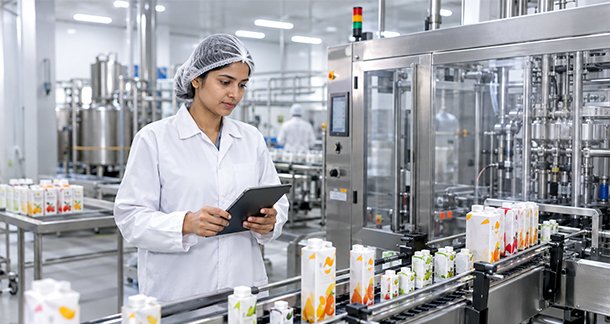
We have all seen those little cartons of milk, juice or other beverages. They may look simple, but there is quite a lot happening inside that small pack. Aseptic packaging combines appropriate heat processing with hygienic filling and protective packaging to help keep certain foods and beverages safe and shelf-stable for extended periods without refrigeration while unopened.
For consumers, this can mean convenience. For food businesses, it can mean opportunity.
When Convenience Meets Nutrition
Consider a working professional leaving home early in the morning, a child carrying a snack to school, or a traveller who does not have access to a refrigerator. A small, ready-to-use pack can make a food or beverage easier to include in everyday routines.
This is where I see an important connection between nutrition and packaging.
We often give people dietary advice that sounds perfect on paper but is difficult to follow in real life. “Have a balanced snack”, “include enough protein”, or “choose nutritious beverages” are useful suggestions—but people also need options that fit their schedules.
A convenient pack can help bridge that gap.
However, there is one point I would emphasise strongly as a dietitian: a convenient package does not automatically make a product healthy.
Consumers still need to look at the nutrition information and ingredients. A small carton can contain added sugar, excess sodium or other ingredients that may not suit everyone’s dietary needs. The pack size may help with portion awareness, but the formulation remains the most important factor.
Why Small Formats Are Interesting for Businesses
The business story becomes even more interesting when we look at smaller packs.
A food company does not necessarily need to think only in terms of large family packs. Different consumers have different consumption occasions. One person may want a single serving, while another may prefer a larger format for the household.
Small packs allow businesses to build products around specific occasions—breakfast on the go, a school snack, post-workout consumption, travel or an office break.
Aseptic packaging can also offer logistical advantages for suitable products because unopened products can be distributed without the same dependence on refrigerated storage. This may make it easier for brands to reach different markets and manage distribution.
For emerging nutrition brands, this can be particularly interesting.
Instead of asking, “How do we sell more?” businesses can ask a better question:
“How do we make the right quantity easier for the consumer to choose?”
That change in thinking can lead to more thoughtful products.
Small Packs Can Also Mean Small-Batch Thinking
There is another idea I find particularly relevant for new food businesses: start by understanding the consumer before scaling up.
Smaller formats can provide an opportunity to test consumer response to different flavours, formulations, pack sizes and price points. A company can learn what people actually want rather than making assumptions based purely on market trends.
Of course, packaging format alone cannot solve the economics of a product. Production costs, minimum order quantities, machinery, filling technology, material costs, distribution and retail margins all need to be considered.
But when planned properly, packaging can become part of the business strategy rather than simply an expense on the balance sheet.
What About Food Waste?
There is also a sustainability conversation here.
Sometimes we buy more food than we can realistically consume. A large package may make financial sense at first, but if part of the product is eventually discarded, the apparent saving disappears.
Right-sized packaging can help match the amount purchased with the amount consumed.
For businesses, reducing spoilage can also have an economic benefit. Product lost during storage, transportation or retail is not just a sustainability concern—it represents money, resources and production effort that have already been invested.
That makes shelf stability an important consideration when companies design products for markets with long or complicated distribution networks.
Why Small Formats Are Interesting for Businesses
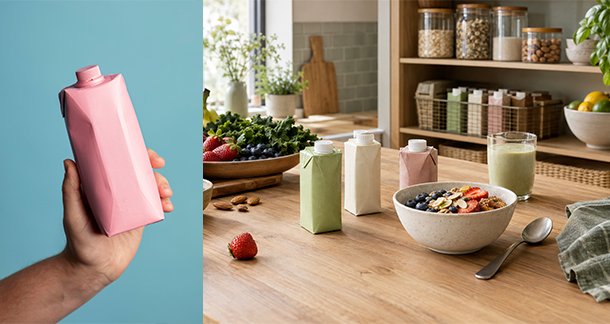
The business story becomes even more interesting when we look at smaller packs.
A food company does not necessarily need to think only in terms of large family packs. Different consumers have different consumption occasions. One person may want a single serving, while another may prefer a larger format for the household.
Small packs allow businesses to build products around specific occasions—breakfast on the go, a school snack, post-workout consumption, travel or an office break.
Aseptic packaging can also offer logistical advantages for suitable products because unopened products can be distributed without the same dependence on refrigerated storage. This may make it easier for brands to reach different markets and manage distribution.
For emerging nutrition brands, this can be particularly interesting.
Instead of asking, “How do we sell more?” businesses can ask a better question:
“How do we make the right quantity easier for the consumer to choose?”
That change in thinking can lead to more thoughtful products.
Small Packs Can Also Mean Small-Batch Thinking
There is another idea I find particularly relevant for new food businesses: start by understanding the consumer before scaling up.
Smaller formats can provide an opportunity to test consumer response to different flavours, formulations, pack sizes and price points. A company can learn what people actually want rather than making assumptions based purely on market trends.
Of course, packaging format alone cannot solve the economics of a product. Production costs, minimum order quantities, machinery, filling technology, material costs, distribution and retail margins all need to be considered.
But when planned properly, packaging can become part of the business strategy rather than simply an expense on the balance sheet.
What About Food Waste?
There is also a sustainability conversation here.
Sometimes we buy more food than we can realistically consume. A large package may make financial sense at first, but if part of the product is eventually discarded, the apparent saving disappears.
Right-sized packaging can help match the amount purchased with the amount consumed.
For businesses, reducing spoilage can also have an economic benefit. Product lost during storage, transportation or retail is not just a sustainability concern—it represents money, resources and production effort that have already been invested.
That makes shelf stability an important consideration when companies design products for markets with long or complicated distribution networks.
Packaging Should Build Trust, Not Just Attention
Walk through a supermarket, and you will notice that packaging is competing for attention everywhere. Bright colours, health claims and attractive designs can all influence purchasing decisions.
But I believe the next stage of food packaging should be less about shouting and more about building trust.
Consumers are becoming increasingly interested in what they eat, how it is made and what is actually inside the pack. Clear nutritional information and honest communication are therefore valuable.
A company should not use the word “aseptic” as though it automatically means “healthy”. Nor should packaging become a substitute for a good nutritional formulation.
For me, good packaging is packaging that protects the product while allowing the consumer to understand what they are buying.
The Opportunity Ahead
Aseptic packaging may look like a technical subject, but its real impact is quite human.
It is about the student who needs a convenient breakfast option, the professional who has limited time, the family trying to reduce food wastage, and the business trying to reach consumers beyond its immediate market.
From a dietitian’s perspective, the goal should always be to make healthier choices, practical, understandable and realistic.
From a business perspective, the opportunity lies in designing products around real consumer needs rather than simply producing another attractive package.
Perhaps that is why the future of packaging will not necessarily be about making products bigger.
It may be about making them smarter, more appropriate and more useful for the moment in which they are consumed.
Sometimes, that future may fit into a carton small enough to hold in one hand—but with a business idea big enough to reach an entire market.
By Dt. Muskan
(Masters in Dietetics & Nutrition)