In conversation with Ashraf Arinchikkool, Managing Director of Safe Automations, he delves into how integrated turnkey solutions are redefining F&B automation across GCC and India, and why Safe Automations is uniquely positioned to lead it.
Question– Your solutions span from primary packaging to end-of-line automation and inspection. How is the demand for integrated, turnkey solutions evolving in the food & beverage industry, especially among mid-sized manufacturers?
The shift toward integrated, turnkey solutions is reshaping how we operate across GCC and Indian markets, and it’s accelerating. Mid-sized manufacturers in India’s packaged foods, dairy, and bakery sectors are moving away from piecemeal purchases toward end-to-end accountability. The reasons are straightforward: operational complexity makes multi-vendor coordination a liability, and integrated solutions demonstrably improve capex efficiency, one Indian customer reported 30% faster ROI after moving away from a traditional multi-vendor setup.
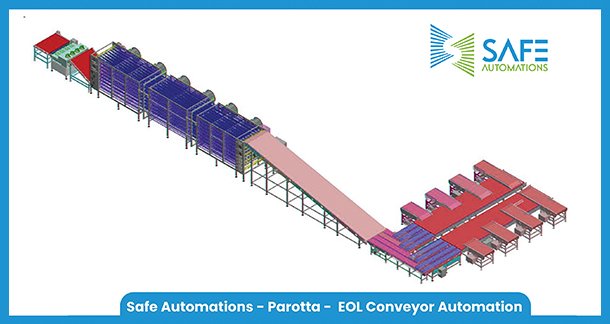
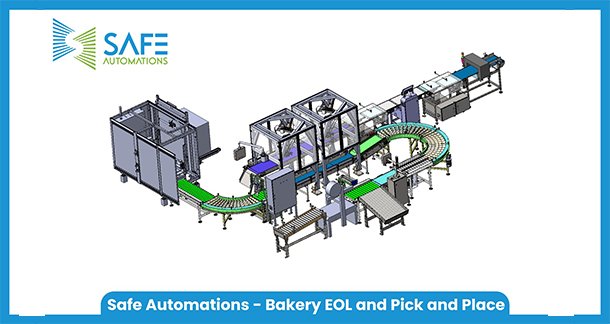
Our hybrid model is built precisely for this moment. We engineer bespoke conveyance systems at our Bangalore facility and integrate best-in-class global inspection and packaging equipment around them, optimizing the entire line, not just its parts. Demand is strongest in dairy, confectionery, and ready-to-eat foods, where scaling requires synchronized automation. The shift in customer language says it all: RFQs have moved from “send us a checkweigher spec” to “design me a complete line for 250 ppm throughput with full traceability.”
Question– With increasing regulatory scrutiny on food safety, how are your inspection technologies (X-ray, metal detection, checkweighing) helping F&B brands meet global compliance standards like HACCP and export requirements?
Compliance is the lingua franca of modern F&B, and every customer, from Arla Foods in Bahrain to Nestlé in India asks the same question: “Will this system protect me from recalls, border rejections, and liability?” Our inspection portfolio answers that directly. We deploy Wipotec X-ray systems for foreign body detection—stones, glass, metal, high-density polymers, giving clients the audit trail regulators demand; a recent deployment for a Saudi Arabian ice cream manufacturer detected a stainless steel screw in a single 8-hour run, averting a catastrophic recall.
CEIA metal detection handles ferrous, non-ferrous, and stainless steel contaminants across Indian food segments, integrated with automated rejection and documented compliance records for FSSAI, BRC, and SQF certifications. Our Wipotec HC-A checkweigher, paired with our conveyor systems, ensures legal metrology accuracy from 5mg with full data export for audits. The underlying insight is this: inspection is risk transfer. When our clients tell regulators and export partners that every unit was inspected by certified equipment with documented protocols, it unlocks access to EU, US, and Gulf markets, which is why we’ve positioned Safe Automations as a compliance partner, not just an equipment supplier.
Question– Safe Automations is known for delivering customized, cost-effective automation systems. How do you balance customization with scalability and standardization, particularly for fast-growing food brands?
The core tension in this business is balancing scalability with customization and getting it wrong costs both money and relationships. Our answer is modular architecture: standardized conveyor frames, drive systems, and PLC logic form the foundation of 80% of every deployment, enabling replicable designs, efficient spare parts inventory, and scalable technician training. The remaining 20% is where customer-specific requirements live—throughput profiles, reject mechanisms, product handling, engineered at the integration and control layers without rebuilding from scratch.
A mid-sized Indian food processor runs our standard conveyor base across multiple product types, switching from stick packs to pouches in 45 minutes via quick-change interfaces. For fast-growing brands scaling from 5 million to 50 million units annually, this matters enormously, they expand lines by adding stations, not replacing infrastructure. Financially, standard components drive economies of scale while customization remains a high-margin service layer, and spare parts for standard modules generate recurring revenue across installations. This modularity also makes our partner integrations seamless by design, eliminating proprietary rework at every customer site.
Question- You collaborate with global technology leaders like Wipotec and CEIA. How do these partnerships enhance your ability to bring cutting-edge automation and inspection technologies to Indian and GCC food processors?
Our OEM partnerships are force multipliers in a market dominated by large automation conglomerates. Wipotec delivers world-class checkweighing and X-ray systems; we localize them, maintaining spare parts inventory across KSA, Gulf, and India, providing same-day technical support so a customer in Jeddah calls us, not Germany. CEIA brings Italian-grade metal detection reliability; we act as their regional engineering arm across GCC and India, handling commissioning, training, and compliance documentation. The cumulative advantage is credibility: tier-1 customers like Nestlé, Mondelēz, and Mars demand OEM-backed, warrantied equipment, and our partnerships position us as systems integrators backed by global principals, not resellers. Customers choose us over direct OEM relationships because we absorb their coordination burden entirely.
Question- As categories like dairy, bakery, and ready-to-eat foods scale rapidly, what specific automation or packaging innovations do you see becoming critical for these high-growth segments?
Across GCC and Indian markets, mid-sized manufacturers in packaged foods, dairy, and bakery are moving decisively away from piecemeal equipment purchases—they want one partner accountable for the entire line. The drivers are simple: multi-vendor complexity creates costly downtime, and integrated solutions compress commissioning timelines and improve capex efficiency; one Indian customer reported 30% faster ROI making the switch. Our hybrid model is built for this, bespoke conveyance systems engineered in-house at our Bangalore facility, wrapped around best-in-class global inspection and packaging partners. The result is full-line optimization, and the market is responding: RFQs have shifted from component specs to “design me a complete line for 250 ppm throughput with full traceability.
Question– Can you tell us about your collaboration with your new partner Food Radar and what that means for your upcoming plans?
Safe Automations has signed an exclusive distribution agreement with Food Radar Systems (Gothenburg, Sweden) across seven territories, KSA, UAE, Qatar, Bahrain, Oman, Kuwait, and India—bringing a genuinely differentiated technology to the region. Food Radar’s proprietary microwave-based detection operates without radiation and identifies contaminants that X-ray systems routinely miss: soft and hard plastics, rubber, wood, fruit stones, aluminum foil, and starch lumps, alongside conventional metals and glass. With no dominant regional player in this segment and growing recognition from FSSAI and GCC food authorities, the timing is strategic. Our Q2 2026 rollout includes pilot installations with major food processors, bundled end-of-line solutions combining Food Radar with CEIA metal detection and Wipotec X-ray, and a co-produced content campaign, cementing our position as the region’s leading contamination detection integrator.