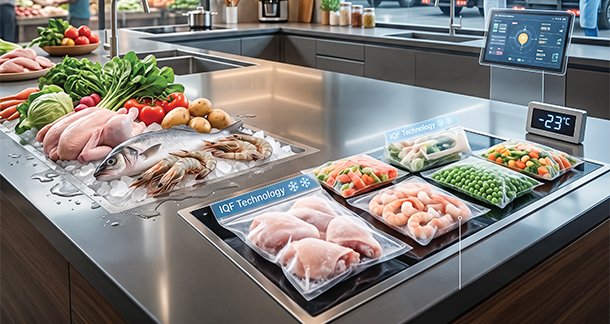
In most Indian homes, buying fresh vegetables, chicken or fish is almost a ritual. We trust what looks fresh at the market, bring it home, store it in the fridge, and cook it the next day believing we are making the healthiest choice for our families. But what truly defines quality goes beyond just how fresh something appears. Hygiene, safety, and knowing the source of our food play an equally important role especially for meat and poultry, where hygienic rearing and processing are essential. There’s also a hidden factor we often overlook- time. The longer the journey from farm to fork, the greater the exposure to temperature fluctuations, repeated handling, and potential quality loss. So, while something may look fresh on the surface, it may not necessarily have retained its optimal nutrition or safety by the time it reaches our kitchen.
According to a recent report highlighted by United Nations Environment Programme, India wastes food worth nearly ₹1.55 lakh crore every year, amounting to almost 78–80 million tonnes annually.(The Hindu, 2026)
A large part of this loss happens long before food reaches our plates, during storage, transport, and handling, especially in highly perishable categories like meat, poultry, and seafood.
So, the question is – when something as valuable as food is already losing its quality across the journey, are we really choosing freshness, or simply choosing what looks fresh in that moment?
The Freshness Paradox
As consumers, we are more aware than ever, we read labels, look for protein, and try to make better choices for our families. Yet, when it comes to something as basic as freshness, perception often wins over science.
Across global markets, this thinking is already shifting. As highlighted by the British Frozen Food Federation, more households are turning to frozen formats to reduce waste, especially in categories like meat and seafood. Over 47% of European households have started choosing frozen foods specifically to cut down on household waste.
What is driving this shift is not just convenience, but advancements like Individual Quick Freezing (IQF).
Locked at Its Peak
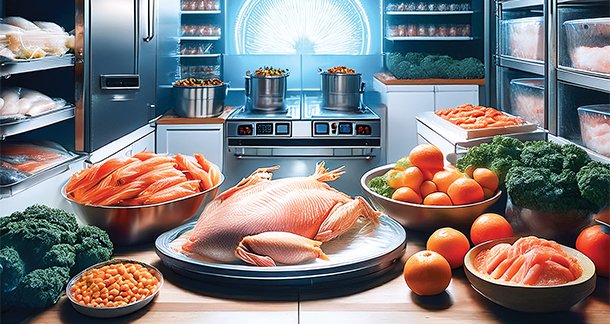
At its core, freshness is about timing. Individual Quick Freezing (IQF) reflects a shift towards more precise, technology-led preservation.
In simple terms, IQF works by freezing food rapidly at extremely low temperatures, typically between –30°C and –40°C. This speed is critical. It helps halt the activity of microorganisms that cause decay, while also preserving the natural moisture, texture, and flavour of the product. Unlike older methods of freezing, which were slower and often affected quality, IQF treats each piece individually, ensuring more consistent results.
This has a direct impact on how well food retains its quality over time. When preservation happens early and efficiently, the gradual loss that typically occurs during storage and transport in fresh formats can be significantly reduced. Insights from the India Snacking Report Volume 2 (STTEM 2.0) indicate that nearly 45% of experts believe advancements in food technology play a key role in retaining freshness and quality, reinforcing the importance of solutions like IQF in modern food systems.
This shift is also being reflected globally. The Individual Quick Freezing (IQF) market is projected to reach USD 9.24 billion by 2033, growing at a CAGR of 6.2%, indicating rising adoption of technologies that help preserve food quality and nutritional value, particularly in high-protein categories such as meat and seafood. A chicken bought ‘fresh’ may have already spent hours (or days) in transit and storage. IQF, on the other hand, freezes it at peak freshness—locking in quality at the right moment.
For consumers, this translates into something simple but valuable – better quality food, longer usability, and greater confidence in what they are consuming.
Beyond Myths: What IQF Actually Delivers
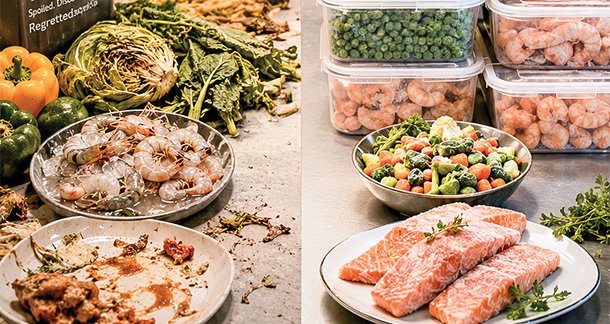
Technologies like Individual Quick Freezing (IQF), which we discussed earlier, work by rapidly freezing food at extremely low temperatures, helping preserve its natural texture, moisture, and overall quality. Unlike slower, conventional freezing methods that can impact structure, IQF ensures that food is preserved in a more controlled and consistent way, using temperature rather than additives, which means it does not require added preservatives to maintain quality.
IQF offers several clear benefits:
- Retention of up to 90% of original nutrients in vegetables, meats, and fruits.
- Extended shelf life without the need for preservatives or additives.
- Portion control, allowing consumers to use only what they need.
- 25% reduction in food waste compared to conventional freezing.
Rethinking What We Call Fresh
As we move through our daily routines, it’s worth asking what truly defines quality in the food we consume. Technologies like Individual Quick Freezing (IQF) are not just about convenience, they reflect a more precise and informed way of preserving food at the right moment.
This shift isn’t about replacing one format with another it’s about enabling more informed choices, where consumers understand not just how food looks, but how it has been handled. Because when food is handled intelligently, it allows us to make better choices not just for our homes, but for the larger system we are part of.
– Anushree Dewen
Head of Marketing & Innovation, Godrej Foods Ltd