

Introduction
Milk has been consumed by humans since ancient times and is regarded as one of the most complete natural foods. It provides essential nutrients required for growth, development, and maintenance of health. Traditionally, milk has been valued for its role in infant nutrition and bone health. However, recent scientific research has highlighted that milk is more than just a source of basic nutrition; it also acts as a functional food due to the presence of several biologically active compounds.
Nutritional Composition of Milk
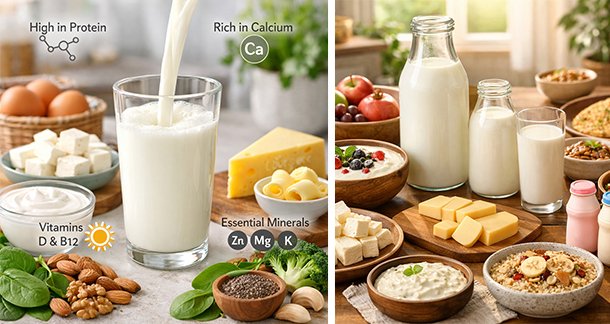
Milk is a rich source of high-quality proteins, carbohydrates, fats, vitamins, and minerals. It contains casein and whey proteins that provide essential amino acids. Milk is also an excellent source of calcium and phosphorus, which are crucial for bone formation and maintenance. In addition, milk contains vitamins such as A, D, B₂, and B₁₂, contributing to metabolic functions and immune health.
Bioactive Components and Functional Properties
Beyond its nutritional value, milk contains several bioactive components such as bioactive peptides, enzymes, immunoglobulins, oligosaccharides, conjugated linoleic acid, and antimicrobial proteins. These components play important roles in regulating digestion, enhancing immune response, and inhibiting the growth of pathogenic microorganisms. Bioactive peptides released during digestion or fermentation exhibit antihypertensive, antioxidant, and anti-inflammatory properties.
Role of Milk in Gut Health and Immunity
Milk plays a vital role in the development and maturation of the gastrointestinal tract, particularly in infants. Milk oligosaccharides and immunological components help in shaping gut microbiota and strengthening mucosal immunity. Enzymes and antimicrobial agents such as lactoperoxidase and lysozyme protect against harmful bacteria. These properties make milk an important dietary component for maintaining gut health and immune balance.
Fermented Dairy Products as Functional Foods
Fermented dairy products such as yogurt, probiotic milk, and cheese enhance the functional value of milk. These products contain beneficial microorganisms like Lactobacillus and Bifidobacterium species, which improve digestion, reduce lactose intolerance, and promote intestinal health. Probiotic dairy products have also been associated with improved immunity and reduced risk of gastrointestinal disorders.
Milk and Prevention of Chronic Diseases
Regular consumption of milk and dairy products has been linked with a reduced risk of chronic diseases such as osteoporosis, hypertension, cardiovascular diseases, and obesity. The calcium and bioactive peptides present in milk help regulate blood pressure and support bone density. Dairy components may also influence body weight regulation and metabolic health.
Conclusion
Milk is no longer considered only a traditional food but is now recognized as a functional food with emerging health benefits. Its rich nutritional profile combined with bioactive and probiotic components makes milk and dairy products valuable for promoting health and preventing chronic diseases. With advancements in food technology and increasing consumer awareness, milk-based functional foods are expected to play a significant role in future dietary strategies.
References:
Brown, L., Rosner, B., Willett, W. W., & Sacks, F. M. (2015). Cholesterol-lowering effects of dietary fiber: A meta-analysis. The American Journal of Clinical Nutrition, 69(1), 30–42.
Donovan, S. M. (2016). The role of milk components in the development of infant gastrointestinal tract and immune function. Advances in Nutrition, 7(1), 17–27.
El-Fattah, A. M. A., Sakr, S. S., El-Dieb, S. M., & Elkashef, H. A. (2018). Functional dairy products: A review. Journal of Food Science and Nutrition Research, 1(1), 1–10.
FAO/WHO. (2002). Guidelines for the evaluation of probiotics in food. Food and Agriculture Organization of the United Nations and World Health Organization.
Hadjimbei, E., Botsaris, G., Goulas, V., & Gerothanassis, I. P. (2019). Functional goat’s milk yogurt supplemented with plant extracts and probiotics. Food Chemistry, 278, 235–243.
Hsieh, Y. H. P., & Ofori, J. A. (2010). Innovations in food technology for health. Journal of Food Science, 75(1), R30–R36.
Karelakis, C., Zevgitis, P., Galanopoulos, K., & Mattas, K. (2019). Consumer trends and attitudes toward functional foods. Journal of International Food & Agribusiness Marketing, 32(3), 266–294.
Kaur, N., Singh, D. P., & Kaur, R. (2017). Functional foods: An overview. International Journal of Food Science and Nutrition, 2(5), 1–6.
Pariza, M. W., Park, Y., & Cook, M. E. (1999). The biologically active components of conjugated linoleic acid. Progress in Lipid Research, 38(4), 329–341.
About the Authors:
Jahnvi Dev1 and Dr. Ruchi Verma2*
1PG student and 2Assistant Professor
Department of Food Processing and Technology
Gautam Buddha University, Greater Noida-201312
Corresponding mail Id: ruchiverma0715@gmail.com

