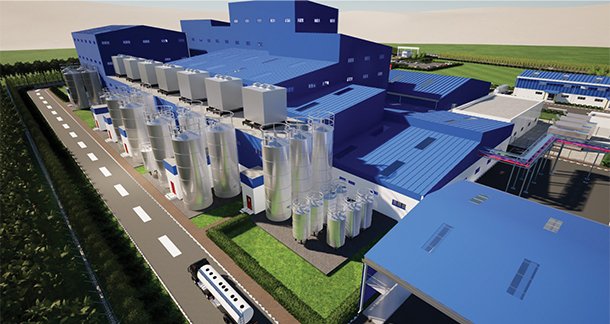
In the dairy industry, food safety and hygiene are not just regulatory requirements—they are the backbone of consumer trust and brand reputation. With rising demand for safe, traceable, and globally compliant dairy products, hygienic engineering has emerged as a non-negotiable pillar of modern dairy factory design.
What Is Hygienic Engineering?
Hygienic engineering refers to the systematic design of buildings, utilities, equipment, and workflows in a way that prevents microbial, chemical, and physical contamination. It ensures that every surface in contact with food or food environments is easy to clean, resistant to bacterial growth, and compliant with global food safety standards such as FSSAI, FSSC 22000, ISO 22000, BRC, and USFDA.
It’s not just about adding cleaning protocols. True hygienic engineering starts from the first pencil sketch of the dairy plant layout—dictating the zoning of operations, the material flow, drainage slope, ventilation strategy, and the design of equipment welds and pipe joints.
Why Is Hygienic Engineering Critical in Dairy?
Dairy products are among the most microbiologically sensitive in the food chain. Even a small lapse in factory layout, surface design, or drainage flow can lead to bacterial growth, product spoilage, or costly compliance failures.
In many older factories or poorly designed plants, issues like water stagnation, crisscross movement of raw and finished goods, hollow structures, and unsealed penetrations are still prevalent. These not only compromise food safety but also increase operational costs and risk of regulatory action.
Key Elements of Hygienic Dairy Factory Design
Hygienic Engineering (HE) is not a product, but a body of knowledge and practices refined over decades through real-world application. The most effective way to implement it in dairy factory projects is to leverage the lessons learned from previous food and dairy plant designs. Hygienic engineering can be practically applied across three actionable domains: building design, zoning and air handling, and equipment design and installation.
1. Hygienic Building Design
Dairy factory buildings must be designed, constructed, and maintained to support cleanable operations, logical process flow, and ease of maintenance. Proper layout planning ensures there is enough space for hygienic performance of tasks, correct placement of equipment, and prevention of material or personnel cross-contamination.
Controlled access to personnel and visitors is essential. Clearly marked walkways and designated traffic routes—both indoor and outdoor—should be incorporated to prevent unnecessary movement through sensitive processing areas. Manufacturing areas should never serve as general thoroughfares for staff, visitors, or materials. All services—water, drainage, lighting, ventilation, cleaning, and hygiene facilities—must be designed and monitored to minimize contamination risks.
2. Zoning and Air Handling
A well-structured zoning plan is central to hygienic design. It defines hygiene levels for different process areas, demarcates high-risk zones, and outlines cleaning regimes and HVAC conditions such as temperature, humidity, filtration, and pressure differentials. Zoning ensures effective separation of:
- Wet vs. Dry areas
- Raw vs. Processed product zones
- Non-critical vs. Critical hygiene areas
Depending on product exposure, areas may be classified as:
- High hygiene: Product exposed to environment (e.g., filling, packing)
- Medium hygiene: Semi-processed product exposed (e.g., mixing, blending)
- Basic hygiene: Product not exposed (e.g., inside pipes, silos, or sealed packs)
Zoning helps control cross-contamination, allergen migration, and airborne risks, and must clearly identify zones such as manufacturing areas, CIP rooms, utility corridors, storage zones, laboratories, staff amenities, and waste storage areas.
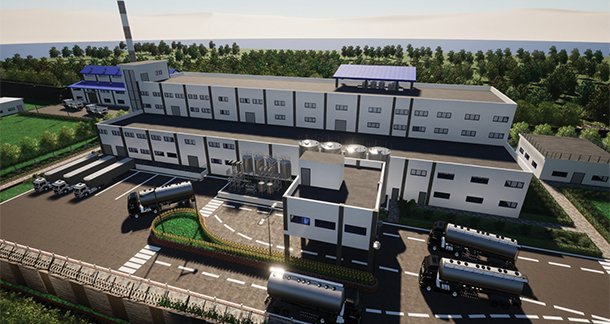
3. Hygienic Equipment Design & Installation
Equipment design plays a critical role in ensuring built-in food safety. All product contact surfaces must be:
- Made from food-compatible materials (e.g., SS 304 or 316)
- Inert to the food under operating conditions
- Free from migration risk or absorption that could affect product safety
Surfaces should be smooth, non-porous, and crevice-free to prevent the buildup of food particles, biofilm, or pests. Internally, equipment must minimize dead zones and allow complete cleanability—either through CIP (Clean-In-Place) systems or easy manual access where required. Designs should ensure self-draining or self-emptying geometry, protecting product integrity and minimizing contamination from foreign matter like bolts or gaskets.
Key design guidelines include:
- No hollow or sealed bodies where moisture or pests can accumulate
- No sharp corners, crevices, or dead legs in piping
- Clear separation between raw and ready-to-eat (RTE) zones
- Equipment must be positioned to allow accessibility for cleaning and maintenance
- “Cleanable” doesn’t always mean “CIP-able”—each system must be evaluated individually
PMG Engineering’s Hygienic Design Philosophy
At PMG Engineering, we embed hygienic engineering principles across all disciplines—civil, mechanical, process, electrical, and HVAC. Our “Early Management Workflow” ensures these practices are not an afterthought but are embedded from basic design to final commissioning.
We don’t believe in over-engineering or creating costly cleanroom-like environments where not needed. Instead, we deliver intelligent, practical, and food-compliant designs that meet both local and global hygiene benchmarks. Every design is translated into comprehensive GFC documentation, allowing contractors to execute without ambiguity.
What truly sets us apart is our independent engineering mindset—we are not aligned with any supplier or contractor. This allows us to recommend the best solutions for food safety, durability, and cost-effectiveness, without any bias.
The Bottom Line
Hygienic engineering is not a luxury—it is a competitive advantage. In today’s dairy sector, where compliance audits, export standards, and consumer scrutiny are at an all-time high, only those factories that prioritize hygienic design will stand the test of time.
By integrating hygienic engineering into every layer of factory design, PMG Engineering is helping India’s dairy sector meet world-class standards while ensuring cost efficiency, operational ease, and long-term sustainability.
To learn more about Hygienic Engineering, visit www.pmg.engineering or reach out to Abhinav Pandey at abhinav.pandey@pmg.engineering