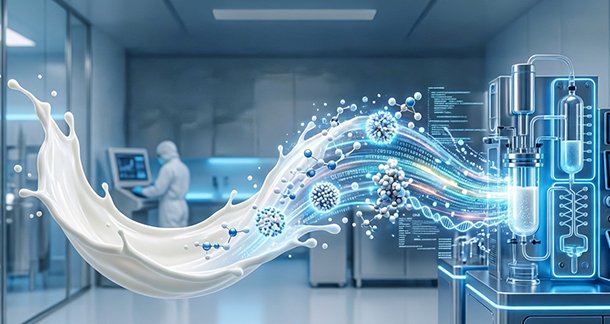
1.Introduction: The Evolution of Dairy Ingredients
The dairy industry has traditionally been valued for providing essential nutrients such as high-quality proteins, calcium, phosphorus, and vitamins. However, in recent decades, dairy processing has evolved from simple preservation and product manufacture to a technologically advanced system focused on ingredient innovation. Modern dairy ingredients are no longer limited to basic milk solids but now include specialized proteins, bioactive compounds, and functional components designed for specific nutritional and industrial applications. Advances in food science, biotechnology, and engineering have transformed dairy ingredients into high-value products used in functional foods, infant nutrition, sports beverages, and medical nutrition. This shift reflects changing consumer expectations toward healthier, safer, and more sustainable food products.
- The Changing Landscape of Dairy Ingredient Innovation
2.1 Drivers of Innovation
Innovation in dairy ingredients is primarily driven by increasing consumer demand for health-oriented foods, environmental sustainability, and personalized nutrition. Modern consumers prefer foods that support immunity, gut health, muscle development, and cognitive performance. This has encouraged the development of ingredients with targeted health benefits such as whey protein isolates, lactoferrin, and milk fat globule membrane. Sustainability concerns related to greenhouse gas emissions, water usage, and waste management in dairy production have further accelerated the adoption of efficient processing and alternative production methods. In addition, population aging and lifestyle changes have created a need for specialized dairy ingredients for elderly nutrition, sports nutrition, and clinical feeding. Digitalization and automation under Industry 4.0 have also contributed by enabling better quality control, traceability, and optimization of dairy processing operations.
- Advanced Processing Technologies for Dairy Ingredients
Traditional dairy processing relies heavily on heat treatments such as pasteurization, evaporation, and spray drying. Although effective for microbial safety, these methods can negatively affect sensitive nutrients and functional properties of proteins. To overcome these limitations, advanced non-thermal and hybrid technologies are increasingly used in dairy ingredient processing. These technologies aim to preserve nutritional quality while improving efficiency and product stability.
3.1. Non-Thermal Processing Technologies
Non-thermal processing technologies such as ultrasound, cold plasma, and high-shear processing have gained attention due to their ability to inactivate microorganisms with minimal heat damage. Ultrasound treatment improves homogenization, enhances extraction of proteins and bioactive compounds, and increases mass transfer during membrane filtration. Cold plasma technology uses ionized gases to destroy pathogenic microorganisms and enzymes without significantly affecting flavour or nutrient content. Ultra-shear technology creates extremely fine emulsions that improve beverage stability without requiring additional stabilizers. Millisecond heating and pressure technologies rapidly inactivate microbes while reducing chemical changes in milk proteins and fats. Together, these technologies improve ingredient quality, shelf life, and functional performance while reducing energy consumption.
- Fractionation and Functional Dairy Ingredients
Milk is a complex biological fluid containing proteins, fats, lactose, minerals, and vitamins. Modern fractionation technologies allow selective separation of these components to produce ingredients with enhanced functionality. Membrane filtration techniques such as ultrafiltration, nanofiltration, and microfiltration are widely used to isolate whey proteins, caseins, and lactose with high purity.
4.1 Protein Fractionation
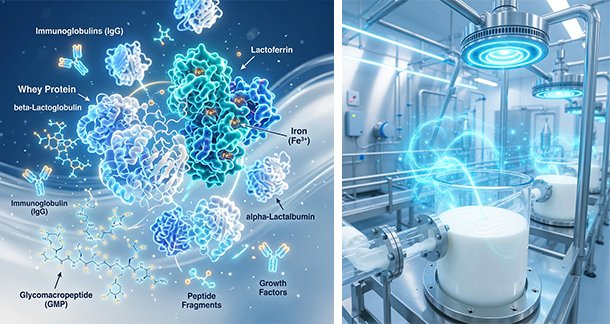
Protein fractionation enables the production of specific protein ingredients with tailored functional and nutritional properties. Whey protein isolates and concentrates are widely used due to their high digestibility and amino acid content. Beta-lactoglobulin and alpha-lactalbumin fractions are produced for use in infant formula and sports nutrition. Micellar casein, obtained through membrane filtration without acid precipitation, retains its native structure and provides slow-digesting protein suitable for sustained amino acid release. Heat-stable whey protein fractions are increasingly used in beverages and nutritional supplements because they resist aggregation during thermal processing. These innovations allow manufacturers to design products with specific texture, stability, and nutritional profiles.
4.2 Bioactive Dairy Components
Beyond macronutrients, milk contains several biologically active components that exert physiological benefits. Lactoferrin is an iron-binding protein with antimicrobial, anti-inflammatory, and immune-modulatory effects. Milk fat globule membrane is rich in phospholipids and glycoproteins that support brain development, gut health, and metabolic regulation. Bioactive peptides formed during enzymatic hydrolysis of milk proteins show antihypertensive, antioxidant, and anti-stress activities. These components are now incorporated into functional foods, dietary supplements, and clinical nutrition products, transforming dairy ingredients into therapeutic and preventive nutrition tools.
- Novel Ingredient Delivery and Protection Systems
Many functional dairy ingredients are sensitive to heat, oxygen, light, and digestive conditions. To protect these compounds and improve their effectiveness, advanced delivery systems have been developed.
5.1. Encapsulation Technologies
Encapsulation involves entrapping active ingredients within protective coatings that shield them from environmental damage and allow controlled release. Microencapsulation and nanoencapsulation techniques are used to protect vitamins, probiotics, omega-3 fatty acids, flavors, and bioactive peptides. Common methods include spray drying, freeze drying, coacervation, fluidized-bed coating, and supercritical fluid processing. Encapsulation improves solubility, stability, shelf life, and bioavailability of functional ingredients. In dairy products, encapsulated probiotics and Flavors ensure consistent sensory quality and health benefits throughout storage and consumption.
- Digital Technologies and Dairy 4.0
The application of digital technologies in dairy processing has led to the concept of Dairy 4.0, where automation, data analytics, and smart systems enhance efficiency and quality.
6.1 Industry 4.0 in Dairy Production
Digital transformation enables real-time monitoring of milk quality, temperature, microbial load, and processing parameters using sensors and connected devices. Internet of Things (IoT) systems provide continuous data that allow rapid detection of deviations and process optimization. Blockchain technology ensures transparency and traceability from farm to finished ingredient, strengthening consumer trust. Big data analytics supports decision-making related to production scheduling, inventory management, and product consistency. These tools significantly reduce waste, energy use, and production losses.
6.2 Artificial Intelligence for Quality and Efficiency
Artificial intelligence is increasingly applied for pattern recognition and predictive control in dairy processing. Machine learning models analyse processing data to predict spoilage, equipment failure, and quality defects. Automated vision systems detect physical defects and contamination in ingredient powders. AI also supports formulation development by predicting ingredient interactions and optimizing nutritional and sensory properties. These technologies improve processing precision, reduce human error, and increase production reliability.
- Ingredient Innovation in Product Formulations
Technological advancements in dairy ingredients have expanded their application in product formulation. Modern dairy products are designed to deliver specific functional and sensory benefits.
7.1 Functional Dairy Products
Protein-enriched beverages and yogurts are formulated to support muscle growth, satiety, and recovery. Probiotic and prebiotic dairy products enhance gut microbiota balance and immune function. Dairy-based nutritional drinks for elderly and clinical patients provide easily digestible proteins and micronutrients. Innovations such as flavoured high-protein drinks and fortified dairy snacks cater to changing lifestyles and convenience needs.
7.2 Clean-Label and High-Value Ingredients
There is growing demand for clean-label products containing fewer additives and recognizable ingredients. Membrane filtration and fractionation allow production of stable dairy ingredients without chemical stabilizers. Natural emulsifiers and protein fractions replace synthetic compounds while maintaining texture and shelf life. High-value ingredients such as lactoferrin and MFGM increase the nutritional and commercial value of dairy products.
- Sustainability and Packaging Innovations
8.1 Sustainable Packaging Technologies
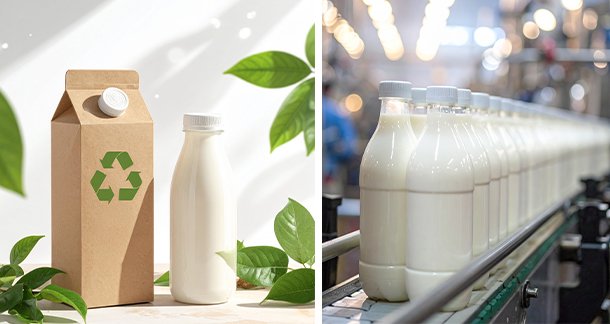
Sustainability has become a critical focus in dairy ingredient development. Packaging innovations include biodegradable materials, recyclable cartons, and smart packaging systems that monitor product freshness. Improved barrier materials protect sensitive dairy ingredients while reducing plastic use. These packaging solutions extend shelf life and minimize environmental impact.
8.2 Environmental Impact Mitigation
Dairy ingredient processing now emphasizes energy efficiency, water conservation, and waste reduction. Whey and by-products are converted into valuable ingredients instead of being discarded. Renewable energy sources and closed-loop water systems are integrated into modern dairy plants. These practices reduce carbon footprint and promote circular economy principles.
Conclusion
Technological advancements in dairy ingredients represent a shift from conventional processing toward an integrated system combining food science, biotechnology, digitalization, and sustainability. Modern dairy ingredients are no longer simple nutritional components but functional and bioactive substances designed to meet specific health and industrial needs. Innovations in fractionation, encapsulation, non-thermal processing, artificial intelligence, and precision fermentation are reshaping dairy ingredient production. As research continues to progress, dairy ingredients will play an essential role in functional foods, personalized nutrition, and sustainable food systems, ensuring that dairy remains a vital component of global nutrition in the future.