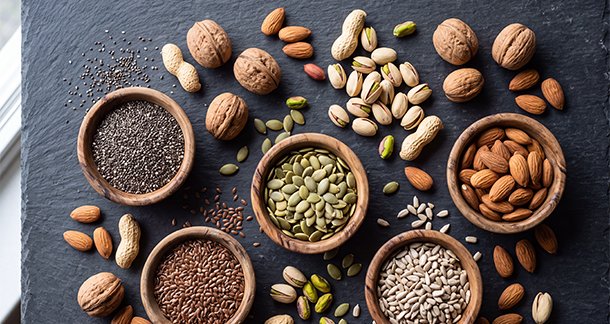
Nuts and seeds have become the backbone of clean-label sports nutrition. But the bar that fuels a half-marathon can also carry aflatoxin, Salmonella or an undeclared allergen. In this category, argues Dr. Anurag Mishra, safety is not a compliance cost — it is the product.
Walk into any gym in Bengaluru or Pune today and the snacks on the counter tell a story. Whey now has company: almond-butter bars, peanut protein spreads, chia puddings, pumpkin-seed trail mixes and roasted makhana with a protein claim on the front. Athletes and weekend runners alike want fuel that looks like food, with an ingredient list they can read.
Nuts and seeds fit that brief perfectly. They bring protein, good fats, fibre, magnesium and vitamin E in a form consumers already trust. For manufacturers, they also bring something less visible: a hazard profile very different from dairy-based protein, and one our industry still underestimates.
The athlete is also a demanding consumer. They eat the same product daily, sometimes several times a day, and often under anti-doping rules that make them personally responsible for what is inside it. That turns food safety in this category into a performance issue, not just a regulatory one.
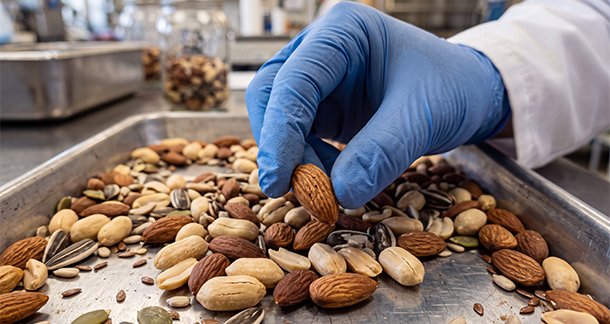
Low moisture is not low risk.
For years, the industry assumed dry foods were safe foods. Bacteria need water to grow, and nuts and seeds have very little. The assumption is only half right. Pathogens such as Salmonella cannot multiply at low water activity, but they can survive in it for months — often longer than the product’s shelf life.
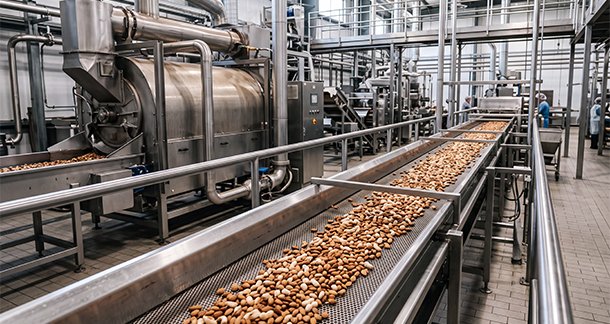
Fat makes it worse. Embedded in an oil-rich matrix like nut paste, Salmonella becomes markedly more heat-tolerant. A roasting step that looks adequate on paper may not deliver the lethality we assume, especially when roaster load, bed depth and airflow vary from shift to shift.
The global industry learnt this the hard way. Large peanut butter and almond recalls over the past two decades reshaped regulation in North America, which now expects validated pathogen-reduction steps for many nut products. For Indian manufacturers of bars, spreads and ready-to-eat mixes, the lessons are direct:
- Validate the kill step with challenge or surrogate studies, not just time-temperature charts.
- Treat everything after roasting as a high-hygiene zone, physically separated from raw intake.
- Keep water out. Dry cleaning should be the default; wet cleaning in a low-moisture plant can create the very niches pathogens need.
- Monitor the environment for Salmonella in post-kill areas, and act on trends, not only on positives.
Aflatoxins: the hazard that starts in the field
If Salmonella is the acute risk, aflatoxin is the chronic one. These toxins, produced by Aspergillus moulds, are among the most potent natural carcinogens known, and groundnut is one of their favourite hosts. Almonds, pistachios and some seeds are also vulnerable.
Indian conditions make this a real supply-chain challenge. Monsoon harvests, delayed drying, damp storage and long aggregation chains through small traders all give the mould time to grow. Contamination is also highly uneven: a handful of badly affected kernels can push a whole lot over the limit, which is why weak sampling gives false comfort.
Control begins long before the factory gate:
- Approve suppliers on their drying and storage practices, not only on price and certificates.
- Set moisture limits at intake and reject failing lots rather than “drying them in”.
- Use statistically sound sampling plans, with adequate sample size and proper grinding before analysis.
- Invest in optical sorting to remove discoloured and damaged kernels, which carry a disproportionate share of the toxin.
- Store in cool, dry, ventilated warehouses with pest control and strict FIFO.
Roasting does not reliably destroy aflatoxin. What enters the plant largely leaves in the product.
Seeds bring their own hazards
Chia, flax, pumpkin, sunflower and sesame have moved from niche to mainstream in sports formulations. Each brings its own challenges.
Oxidation – Flax and chia are rich in omega-3 fatty acids, which turn rancid quickly once seeds are milled or exposed to heat, light and oxygen. Rancidity is a quality defect, but oxidised fats are also undesirable for health. Nitrogen flushing, barrier packaging and realistic shelf-life studies are essential, especially for milled seed powders.
Natural toxicants and metals- Raw flaxseed contains cyanogenic glycosides, so processing and serving size need attention. Some seeds, sunflowers in particular, can accumulate cadmium from soil — significant for a product eaten every day.
Physical contaminants- Small seeds arrive with stones, stems, metal fragments and seeds of other plants. Aspiration, de-stoning, magnets and metal detection are not optional. Sesame also has its own Salmonella history and deserves the same low-moisture discipline as nuts.
Allergens: one line, many risks
Peanut, tree nuts and sesame are among the allergens most likely to cause severe reactions. Yet sports nutrition plants typically run many SKUs on shared lines — a peanut bar in the morning, a “nut-free” seed bar after lunch.
Sticky nut pastes cling to hoppers, extruders and slicers; fine powders travel through the air. Without validated cleaning, verified by protein swabs or rapid test kits, cross-contact is close to certain.
Good practice means an allergen matrix for every line, scheduling from allergen-free to allergen-containing runs, dedicated colour-coded tools, and validated changeover cleaning. “May contain” labelling should follow a documented risk assessment. It should never replace control, nor be printed on every pack by default.
The athlete factor: purity and honest claims
Sports nutrition carries risk ordinary snacks do not: inadvertent doping. Under anti-doping rules, athletes are strictly liable for any prohibited substance found in their samples, whatever its source. A plant that also handles stimulant-based supplements, or buys blended premixes from unverified vendors, can transfer trace contamination into an otherwise clean nut bar.
Brands serving competitive athletes should segregate such materials, qualify premix suppliers rigorously and consider independent batch testing for banned substances. For an elite athlete, one contaminated bar can end a career.
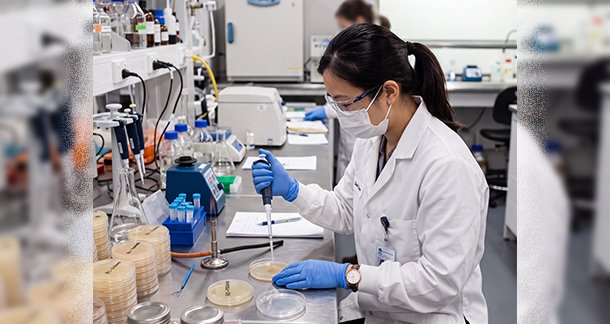
Claim integrity is the second issue. “High protein”, “plant-powered” and “recovery” claims must be backed by the actual formulation and by FSSAI’s nutraceutical and health supplement framework. Protein values should come from validated analysis, not only from ingredient spreadsheets. Adding cheap amino acids to inflate nitrogen-based protein results — protein spiking — belongs in the food fraud vulnerability assessment, alongside adulteration of nut pastes and seeds.
A five-point framework for manufacturers
Across high- and low-risk categories, I have found five steps make the biggest difference:
- Map hazards per ingredient, not per product. Every nut and seed has a different profile; the HACCP plan should reflect that.
- Validate, then verify. Kill steps, allergen cleaning and sorting all need evidence that they work — and routine checks that they still do.
- Bring the supply chain inside the food safety system. Supplier approval, intake testing and farm-level guidance on drying and storage reduce risk at the cheapest point.
- Design for dryness. Hygienic zoning, dry cleaning and environmental monitoring are the backbone of low-moisture safety.
- Invest in culture. Procedures work only when operators understand why a damp floor or a skipped swab matters. Food safety culture turns documents into daily behaviour.
The real performance claim
The appeal of nuts and seeds in sports nutrition is simple: real food, honest ingredients, and steady energy. That promise is only as strong as the controls behind it. For athletes, trust in what they eat is part of performance. For manufacturers, the most important claim on the pack is the one that never appears there: this product is safe.
Dr. Anurag Mishra is a food safety and quality leader with over 16 years of experience at PepsiCo, United Breweries, Kimberly-Clark, Mars Wrigley, Fonterra and Wilmar. He holds a PhD in Food Technology. Views expressed in the article are personal.