
A conversation between Ian Healey, Sabine Straka and Jay Gilbert, IFT Director of CoDeveloper and Digital Products at the Institute of Food Technologists, Chicago, USA.
Thanks for finding time to talk with Food Marketing & Technology magazine. We are fascinated to hear your views on Artificial Intelligence in the food industry.
FMT: How has AI influenced or transformed the food industry so far?
Jay Gilbert: AI is fundamentally changing the way we think about food. How we grow it, develop it, manufacture it, distribute it, and ultimately how consumers experience it. One of the biggest shifts is that AI is forcing the industry to think differently. The food industry generates enormous amounts of data, and AI gives us the ability to better analyze that information, uncover insights, and make smarter decisions more quickly. What’s exciting is that this transformation isn’t just about efficiency. It’s also about creating better products, improving sustainability, accelerating innovation, and helping companies connect with consumers in a more meaningful and personalized way. At its best, AI combines data-driven decision making with the feelings all people associated with food, such as joy, nourishment, culture, and community.
What changes does this entail for agriculture, climate change, food and nutrition, ingredients, ingredient lists, flavorings, food safety, shelf life, production/manufacturing processes, the optimization of operational pro-cesses and supply chains, product development?
What will product development look like in the future with AI?
Product development is shifting from a heavily trial-and-error process to a far more computational and insight-driven one. AI will increasingly serve as both a thinking partner and a feasibility partner, helping developers move more quickly from idea to viable prototype while reducing the number of physical iterations required. It also enables more effective experimental design, allowing teams to test smarter instead of simply testing more.
What insights can be gained into consumer behavior and preferences using AI?
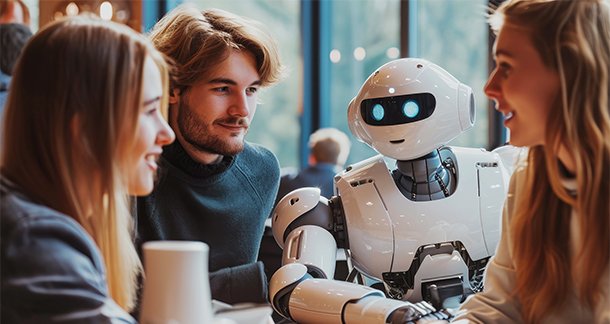
The food industry has access to enor-mous amounts of consumer data—from retail and restaurant behavior to social media, trend analysis, and environmental scanning. AI helps synthesize that information at a scale humans simply can’t process alone. The real opportunity lies in identifying patterns, emerging behaviors, and unmet needs faster and more effectively. Ultimately, better consumer understanding leads to better product development and stronger align-ment between what companies create and what consumers actually value.
How can consumer insights be incorporated into product development using AI?
Consumers should remain at the center of the entire product development pro-cess. At the end of the day, food is deeply human and it’s important to remember that we’re designing products for our neighbors, families, and communities. AI can help us better understand consumer needs and behaviors, but the goal should always be to create foods that bring people joy, nourishment, health, and long-term well-being. The companies that succeed will be the ones that combine technological capability with genuine human understanding.
How can AI be used to predict how the combination of certain ingredients will affect taste, texture and consumer appeal?
Taste and texture are incredibly complex systems, but AI is particularly good at solving complex, data-rich problems.
By analyzing ingredient functionality, sensory relationships, scientific under-standing, and consumer feedback data, AI can help predict how ingredients may interact and the resulting consumer response. That doesn’t eliminate the need for human testing or expertise, but it does significantly accelerate our ability to explore and validate promising directions.
How can AI be used to predict certain trends?
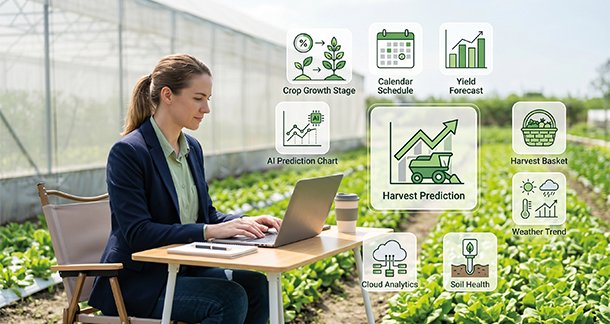
Many food trends actually begin outside the food industry. They’re often influenced by broader shifts in technology, culture, healthcare, restaurants, wellness, and consumer lifestyle behaviors. AI gives us the ability to analyze those leading indicators across multiple sectors simultaneously, helping companies anticipate trends earlier and respond more proactively.
What impacts/changes will consumers notice? What does this mean for consumers in terms of health, preparation or convenience?Consumers will increasingly notice that products feel more aligned with their personal preferences and lifestyles. Whether it’s health-focused innovation, convenience, sustainability, or nutrition trends like GLP-1-related eating behaviors, food products will become more adaptive and responsive to evolving consumer needs. Consumers may not always recognize that AI played a role in developing those products, but they will notice that products increasingly reflect their expectations and priorities.
How will AI influence the food industry in the future? What changes can be expected?
AI literacy will become an essential skill across the food industry. AI alone won’t replace food scientists, but those who implement AI will. As the industry becomes more agile and dynamic, professionals will need to become more adaptable as well. There will be growing demand for people who can combine food science expertise with data fluency, systems thinking, and technological agility.
What potential risks might be associated with AI?
One of the biggest risks is mis-understanding or oversimplifying the technology. AI is a toolbox, and different tools are appropriate for different problems. If one application fails, that doesn’t invalidate the technology as a whole. Another misconception is that AI immediately saves enormous amounts of time for everyone equally. In reality, its value depends heavily on the individual, their expertise, and how effectively they integrate AI into their workflow. The people and organizations that learn how to use AI effectively will gain a meaningful advantage over those who resist or ignore it.
How can companies protect their intellectual property whilst using AI solutions?
Companies need to carefully evaluate the AI platforms they choose, particularly around data security, ownership, privacy, and contractual protections. One major strategic decision is whether to use broad, generalized AI tools or domain-specific platforms built specifically for the food industry. Domain-specific tools such as CoDeveloper often provide stronger alignment with industry processes, better safeguards for proprietary information, and more immediate usability for technical teams. Employee training is also needed about how to use AI systems and necessary safeguards to keep IP safe. Ultimately, companies need solutions they trust, both technologically and strategically.
How do consumers react to AI-developed products?
That’s difficult to measure because products are not explicitly marketed as “AI-developed.” Consumers are likely responding more to the outcomes of AI, such as products that better match their preferences, needs, and expectations. At this stage, consumers may care less about whether AI was involved and more about whether the product delivers value, quality, and trust.
How is AI changing innovation cycles?
AI is making innovation both faster and more continuous. Food development has always been iterative, but AI accelerates every stage of that cycle. That includes from ideation to reformulation to optimization and line extensions. It allows teams to move products to market faster while also continuously improving and adapting those products over time.
What specific skills should young professionals be developing now?
Embrace technology and make learning your greatest currency. The industry is evolving rapidly, and adaptability will be one of the most valuable skills moving forward.
If you were to venture a prediction: what will be the biggest change for businesses?
AI will fundamentally improve companies’ ability to connect with consumers. It will help businesses better understand customer behaviors, preferences, and unmet needs while giving teams more time and capability to respond thoughtfully. Even as the industry becomes more digital, food will remain deeply personal. The brands that succeed will be the ones that use technology to build stronger human connections through food.
For more information:
www.ift.org