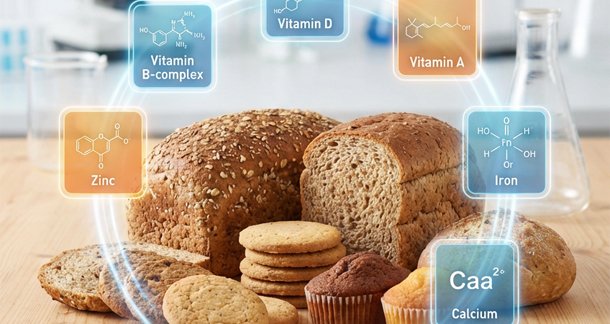
Bakery products such as bread, biscuits, and cakes are widely consumed across all age groups. Due to their regular consumption, they are ideal vehicles for nutrient fortification. Fortification of bakery products involves the addition of essential vitamins and minerals to improve their nutritional value and help reduce micronutrient deficiencies in the population.
- Need for Fortification in Bakery Products
Many people suffer from deficiencies of vitamins and minerals such as iron, calcium, folic acid, and vitamin D. Bakery products prepared from refined flour often lack these nutrients due to losses during milling and processing. Fortification helps restore lost nutrients and improves the nutritional quality of commonly consumed bakery foods.
- Common Vitamins Used in Bakery Fortification
Vitamins commonly added to bakery products include B-complex vitamins such as thiamine, riboflavin, niacin, and folic acid. Vitamin D is added to enhance calcium absorption, while vitamin A is used in some products to improve nutritional value. These vitamins are selected based on their stability during baking and their nutritional importance.
3. Minerals Used in Bakery Fortification
Minerals such as iron, calcium, zinc, and iodine are widely used in bakery fortification. Iron fortification helps prevent anemia, while calcium supports bone health. Zinc improves immune function. These minerals are added in suitable forms to ensure bioavailability without affecting taste or texture.
4. Methods of Fortification
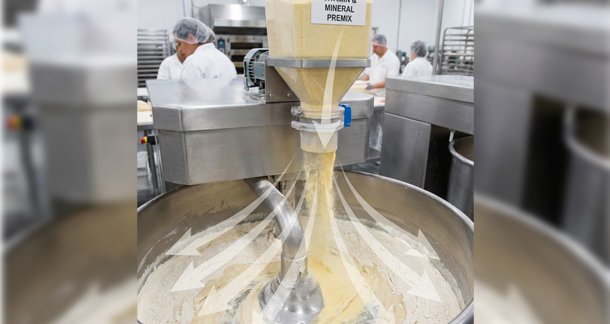
Fortification is commonly achieved by adding vitamin and mineral premixes to flour during mixing. Uniform distribution is essential to ensure consistent nutrient levels. Encapsulation techniques are sometimes used to protect sensitive vitamins from heat and oxidation during baking.
5. Effect of Fortification on Processing and Quality
Fortification may influence dough rheology, color, and flavor. Iron salts can cause color changes, while excess minerals may affect yeast activity. Proper selection and controlled levels help maintain product quality without negatively impacting texture or taste.
6. Stability of Vitamins and Minerals During Baking
High baking temperatures can cause vitamin losses, especially heat-sensitive vitamins like vitamin C and folic acid. Minerals are generally more stable. Over-fortification is often practiced to compensate for nutrient loss during processing and storage.

7. Regulatory Aspects
Fortification levels are regulated by food authorities such as FSSAI to ensure safety and effectiveness. Manufacturers must follow prescribed limits and labeling requirements to inform consumers about added nutrients.
8. Conclusion
Fortification of bakery products with vitamins and minerals is an effective strategy to improve public health. With proper formulation, processing control, and regulatory compliance, nutritionally enhanced bakery products can be produced without compromising quality or consumer acceptance.
Dr. Ruchi Verma
Assistant Professor
Department of Food Processing and Technology
Gautam Buddha University, Greater Noida-201312
Corresponding mail Id: ruchiverma0715@gmail.com