Vanilla flavors are present in many foods. Real vanilla, on the other hand, is a treasure. Vanilla is considered the second most expensive spice after saffron. The production and ripening process for vanilla pods is complex. The end result is a vanilla pod with vanillin as its main flavoring and countless accompanying aromas. Well-known countries of origin are Madagascar and Réunion, but Indonesia is also an important producer of vanilla. The special spice is cultivated throughout the country. ″Indonesia has established itself as a major growing region for vanilla, especially Bourbon vanilla,“ says Angie Martinez, Expert Sourcing + Markets at the Import Promotion Desk (IPD), a project of the German Federal Ministry for Economic Cooperation and Development (BMZ). ″Indonesian vanilla stands out due to its unique flavor profile, which can enrich a variety of foods and beverages.“ As an initiative to promote imports, IPD connects European buyers with producers of vanilla from Indonesia and, in future, also from the new IPD partner country Madagascar, where the sourcing of vanilla has already begun.
Bourbon vanilla & Co.
Vanilla flavors are present in many foods. Real vanilla, on the other hand, is a treasure. Vanilla is considered the second most expensive spice after saffron. The production and ripening process for vanilla pods is complex. The end result is a vanilla pod with vanillin as its main flavoring and countless accompanying aromas. Well-known countries of origin are Madagascar and Réunion, but Indonesia is also an important producer of vanilla. The special spice is cultivated throughout the country. ″Indonesia has established itself as a major growing region for vanilla, especially Bourbon vanilla,“ says Angie Martinez, Expert Sourcing + Markets at the Import Promotion Desk (IPD), a project of the German Federal Ministry for Economic Cooperation and Development (BMZ). ″Indonesian vanilla stands out due to its unique flavor profile, which can enrich a variety of foods and beverages.“ As an initiative to promote imports, IPD connects European buyers with producers of vanilla from Indonesia and, in future, also from the new IPD partner country Madagascar, where the sourcing of vanilla has already begun.
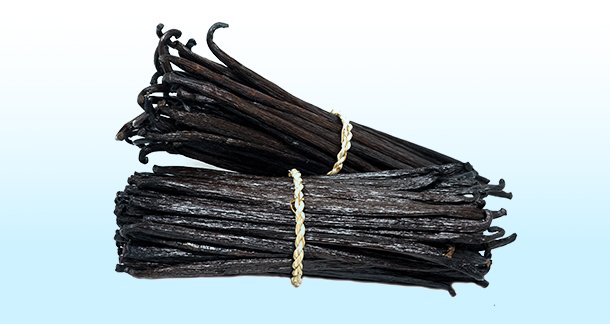
Bourbon vanilla, which is known for its intense flavor, is widely used. It is also cultivated in the IPD partner countries Madagascar and Indonesia, among others. Its pods are rather long and slender. They have a harder skin and many black seeds. Tahitian vanilla pods, on the other hand, are larger, shinier and softer. Perfumed vanilla is easy to distinguish from the other two varieties as its pods are particularly long.
Indonesian vanilla: Special flavor profile
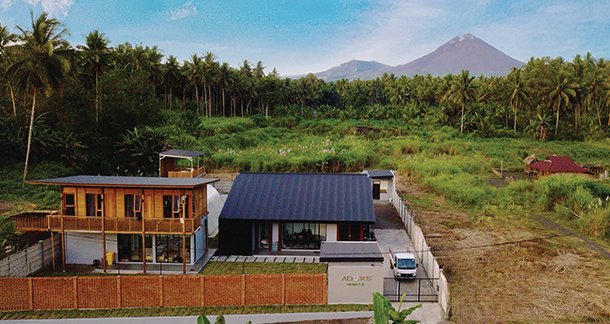
Indonesia has ideal conditions for vanilla cultivation. Originally, vanilla pods were mainly grown in Bali and East Java, but today there are cultivation areas in many parts of Indonesia. Indonesia is therefore the second largest producer of vanilla beans after Madagascar. Both Bourbon vanilla and Tahitian vanilla are produced here. As Bourbon vanilla is protected as a designation of origin and can only be used for pods from Madagascar, Réunion and the other so-called Bour-bon Islands, Bourbon vanilla ″made in Indonesia“ is also referred to as gourmet vanilla pods. High-quality Bour-bon vanilla is produced by companies such as ″Mignon Sista“, ″Adore Rem-pah“ and ″Sima Arôme“. In addition to vanilla pods, they also offer vanilla extract and crystallised pods. As part of the IPD programme, the small and medium-sized enterprises were evaluated by IPD experts for quality, export capacity and social and environmental standards.
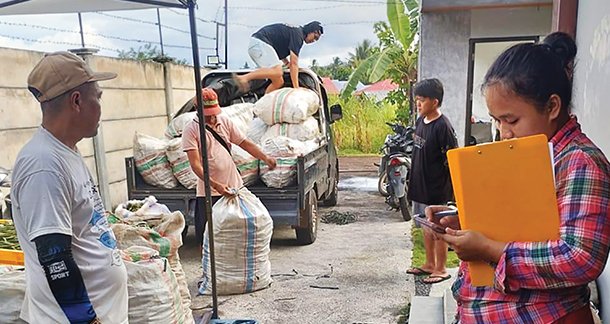
Indonesian Bourbon vanilla has a high vanillin content. It has a correspondingly dominant primary note in its flavor profile. This vanillin note is complemented by strong chocolate and floral notes. The complex profile often also includes caramel undertones. Com-pared to the pods from Madagascar, Indonesian vanilla is characterised by a smoky and spicy flavor. ″Indonesian vanilla beans are rich in strong vanilla flavors, which is due to the climate, soil conditions and local ripening techniques“, says IPD expert Angie Martinez. ″Users appreciate the unique flavor profile.“
The IPD company ″Adore Rempah“ also produces a pod with a particularly high vanillin content: the crystallised Bourbon pod has a vanillin content of up to 3.8 per cent. The average con-tent is 1.5 to 2.5 per cent. The company also produces Tahitian vanilla. Tahi-tian vanilla differs fundamentally from Bourbon vanilla in terms of flavor. It contains less vanillin and has a floral aroma. ″Adore Rempah“ uses pods from the island of Papua. The company describes the flavor of its pods as subtle with a certain sweetness and a strong aniseed-like note.
From the capsule fruit to the vanilla pod
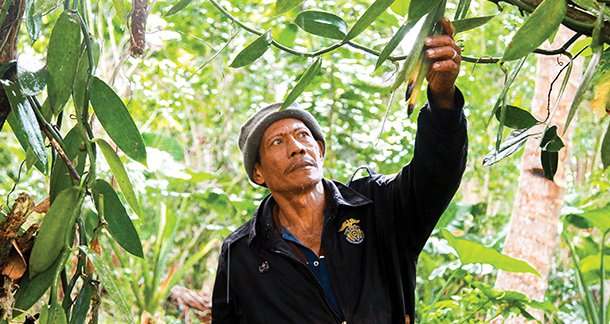
A very complex process is required to turn the capsule fruit of the or-chid into a vanilla pod or vanilla extract. It starts with the pollination of the orchid flowers, which is done by hand. The orchid flowers only open for a short period of time and wither after just a few hours. The flowers must therefore be pollinated one by one with a wooden stick. The vanilla pods are also harvested by hand. This is done shortly before they are ripe, when they are still yellow-green in color. The timing of the harvest is essential so that the vanilla pod can develop its full flavor later on.
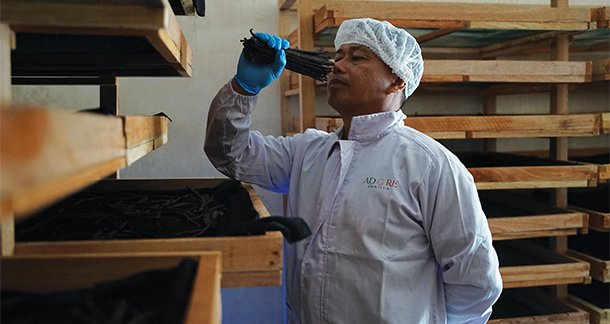
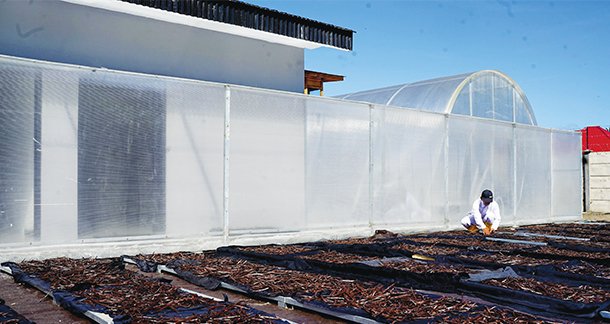
This is followed by the process known as black tanning and maturing, which consists of many individual steps and takes several months: to begin with, the capsules are given a hot water bath or treated with steam. This gives them the necessary moisture and heat for the fermentation process. They are then ″packed“ in airtight containers. This is where the pod develops from the capsule: the pulp collapses, vanillin develops, the capsules shrink and turn brown to black in color. The pods are then dried in the sun until they reach a certain residual moisture content. The pods then turn completely black in color. A subsequent maturing process lasting several months intensifies the vanilla flavors. Around six kilograms of fresh capsule fruits are turned into around one kilogram of vanilla pods. The complex production process, from hand-pollination to ripening, is what makes vanilla so ex-collusive.
Sustainability: protecting the rainforest
Vanilla orchids, which mainly thrive in tropical rainforests, grow in long ten-drils on shade trees. In the Indonesian vanilla plantations, the orchids are mostly planted on the Gliricidia sepium tree. It has the ability to bind nitrogen from the air very well, adapt to poorer soils and enrich them with nitrogen. It therefore plays an important role in protecting and naturally fertilising the soil and helps to prevent soil erosion.
For more information:
www.importpromotiondesk.de