INTRODUCTION
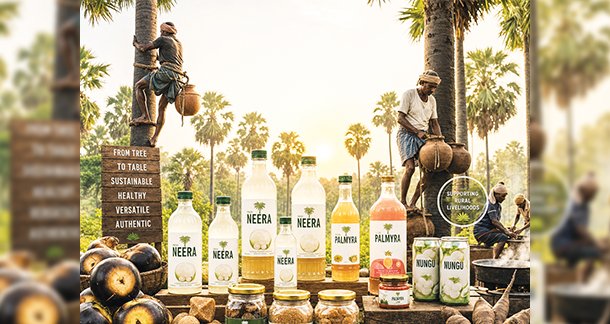
Palmyra tree is a nature’s perennial gift that could flourish well in arid and semi-arid conditions. It is a plant that can grow in adverse and diverse agro climatic conditions ranging from seashores, plains, valleys and hills. Palm tree grows extensively in different parts of world especially in India, Sri Lanka, Malaysia, Indonesia, Australia, Africa and North America. Palmyrah palm, embellish the dry landscape of the semi-arid regions of Tamil Nadu, Andhra Pradesh, Odisha, West Bengal, Bihar, Karnataka and Maharashtra. Palmyra is celebrated and honored to be the state tree of Tamil Nadu in 1978 owing to its widest distribution across the state and its undeniable contribution in rural and cottage industries and the impact on rural livelihood. The edible products obtained in palmyra tree are neera (palm sap), nungu, palmyra mesocarp and palmyra tuber. All the edible products of palmyra are used for direct consumption and for the preparation of value-added products.
VALUE ADDED PRODUCTS FROM PALMYRA
Neera (palm sap):
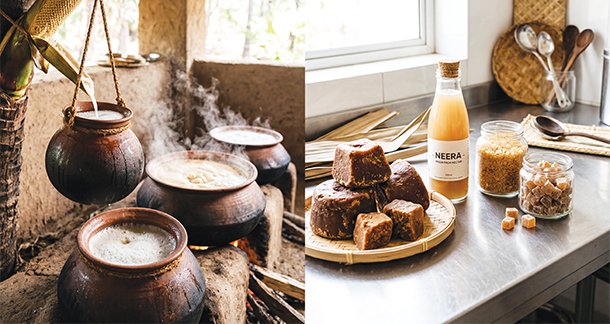
The sap extracted from the inflorescence of Palmyra palm is called ‘Neera’. It involves tapping and collecting dripping juice in hanging earthen pot coated with lime. Neera is typically the most economic produce of Palmyra palm contains a good source of minerals like calcium, phosphorus and iron, vitamin A, niacin, thiamine and riboflavin. Regular consumption of neera cools our body, strengthen bones and teeth. It is susceptible to natural fermentation at ambient temperature within a few hours of extraction.
PROCESSED PRODUCTS FROM NEERA
Bottled neera: The shelf life of neera can be extended by using scientific processing methods such as filtration, pasteurization, addition of preservatives, bottling and pasteurization so that the market reach of the product can be extended up to urban areas.
Palm toddy: Toddy is formed as a result of fermentation of sugary sap by wild yeasts and bacteria, which come into contact with the sap. This is an uncontrolled natural fermentation by several different strains of yeast and bacteria. The medicinal benefit of toddy sap is, it has rich vitamin C and toddy sap has more calories than milk. It helps to fight against the diabetes.
Palm jaggery (Palm gur):
Unfermented neera is processed to form palm jaggery. Palm jaggery is a low glycemic index and is far complex than sugar, this provides energy for a longer time and is not harmful for the body and also improves digestibility. It has rich iron and increase hemoglobin, boost immune system with rich calcium, makes healthier and stronger bone. It also helps in weight loss, cure cough and cold.
Palm sugar and Palm candy
Boiled neera further crystallizes into candy and palm sugar being utilized in traditional medicine also rich in minerals. Palm candy is consumed to treat heat-related illnesses, colds, and coughs.
PALM ENDOSPERM – NUNGU
Jelly like endosperm of palmyra palm is very nutritive, has anti-inflammatory and antioxidant properties. Being rich in minerals (iron, zinc, potassium, calcium, phosphorus, thiamine) and vitamins (B & C,) palm fruits are a healthy option for people on diet or suffering from diabetes. During summers people use palm fruit, to keep body hydrated, also effective in treating digestive problems and other stomach ailments.
PROCESSED PRODUCTS FROM PALM ENDOSPERM
Canned nungu: Peeled nungu is preserved in sugar syrup to enhance storage. One of the most efficient and profitable ways to preserve the delicate jelly seed of the palmyra fruit is through canning nungu.
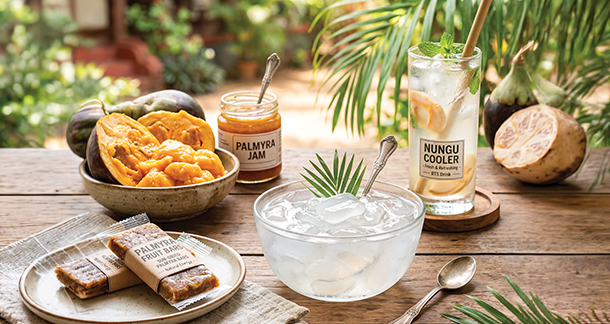
Nungu squash and RTS: Ready-to-serve (RTS) drinks and nungu squash are popular value-added products made from the palmyra fruit’s soft jelly endosperm. These drinks preserve the nungu fruit’s nutritional and medicinal qualities while also offering a refreshing taste. It could be consumed in off-seasons as well.
PALM MESOCARP
The soft orange-yellow mesocarp pulp of the ripe fruit is sugary, dense and edible. It is rich in vitamin A and C. The ripened fibrous outer layer of the palm fruits can also be eaten raw, boiled or roasted. The pulp of the fruit is orange-yellow in color and rich in pigment carotene and lycopene.
PROCESSED PRODUCTS FROM PALM MESOCARP
Palm fruit is used for the preparation of jam, squash, ready to serve beverage and fruit bar. The processed products are prepared by using palm fruit alone or in combination with other fruits. Palm fruit contains the pigment carotene which is used for the extraction of natural yellow color by using spray drier. Natural color is rich in β – carotene and used as a food color in the processed products such as fruit juices, jam, ice cream, icings in cake decoration, traditional sweets and confectionery products.
PALM TUBER:
It is a sprout that grows on palmyra palm. It helps to reduce the body heat and prevent constipation. It contains more fiber, thus reduces the weight. It prevents stomach problem and helps to improve immunity. Palm tuber can strengthen the bones and good for uterus. It has great source of omega- 3 fatty acid, so it reduces the high cholesterol. Palm tuber prevents heart disease, cancer and improves immune system.
CONCLUSION
Palmyra tree plays an important role in human life. Every part of the tree is using for various types of products and it gives more health benefits. The utility of the plant could be widely classified into non-edible, edible and value addition based uses. Value added products prepared from both edible and non-edible parts of palmyra tree is much demand in domestic and foreign markets. Palm based processing industries seem to be suitable and viable alternative for sustainable livelihood of the poor communities involved in palm growing and processing.
About the Authors
Karthika. R1, Dr. Dakshayani.R2, Dr. R. Jagan Mohan3
1M. Tech Student, 2Senior Research Fellow, 3Dean (Students Welfare),
National Institute of Food Technology, Entrepreneurship and Management, Thanjavur.