
. Introduction
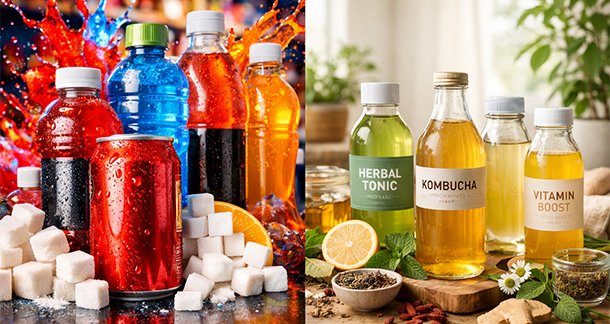
The global beverage sector is undergoing a remarkable transition as consumer preferences move away from traditional coloured beverages—typically high in sugars and artificial additives-toward functional beverages that deliver measurable health benefits. Historically, brightly coloured drinks have dominated due to their visual appeal, sweetness, and sensory gratification. Their vibrant hues, engaging packaging, and bold flavors create strong sensory cues that significantly shape consumer choices and perceived taste (Spence, 2015). However, heightened awareness of lifestyle-related health concerns such as obesity, diabetes, cardiovascular diseases, and metabolic disorders have driven a paradigm shift toward healthier options.
Rise of Functional Beverages
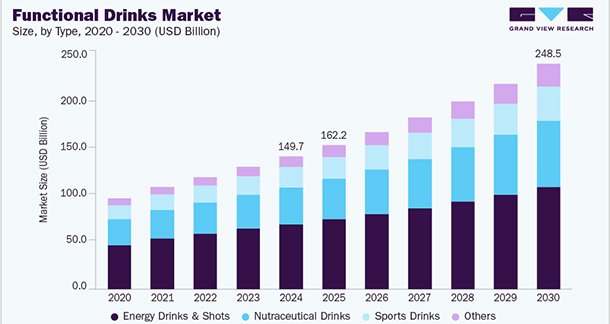
Functional beverages, defined as drinks containing bioactive compounds that provide benefits beyond basic nutrition, have become key players in this evolving market. They include probiotic drinks, plant-based formulations, fortified juices, herbal infusions, and products enriched with vitamins, minerals, antioxidants, and adaptogens. Their value lies not only in health promotion but also in offering convenient, on-the-go wellness solutions (Grand View Research, 2025). The global functional beverage market, valued at USD 149.75 billion in 2024, is projected to reach USD 248.5 billion by 2030 (Giri et al., 2023). This rapid growth is fueled by increasing consumer demand for flavorful, health-focused, and convenient drinks.
Yet, consumer expectations shaped by coloured drinks pose challenges for functional beverages. Bright colours are often associated with sweetness, indulgence, and superior taste, making the subtler hues of many functional drinks a potential barrier to acceptance. Thus, both health benefits and sensory experience remain critical for adoption.
Generational trends further reinforce this shift. Millennials and Gen Z consumers, in particular, favour clean-label, plant-based, and functionally enhanced products while also prioritizing sustainability and ethical sourcing (Firebelly Marketing, 2025). These overlapping drivers of health awareness, sensory preference, and ethical consumption create both opportunities and challenges for beverage manufacturers aiming to reshape consumption behaviours in a colour-driven marketplace. This review explores these dynamics, focusing on how functional beverages can capture consumer attention, the role of colour and sensory cues in shaping perceptions, and strategies to strengthen acceptance and competitiveness.
2. Market Dynamics and Consumer Preferences
2.1 Growth of Functional Beverages vs. Traditional Sugary Coloured Drinks
Growth of Functional Beverages: The functional beverage sector is expanding rapidly, supported by growing consumer demand for health-oriented products. Valued at USD 149.75 billion in 2024, it is forecasted to reach USD 248.51 billion by 2030, with a CAGR of 8.9% (Firebelly Marketing, 2025). The key drivers include:
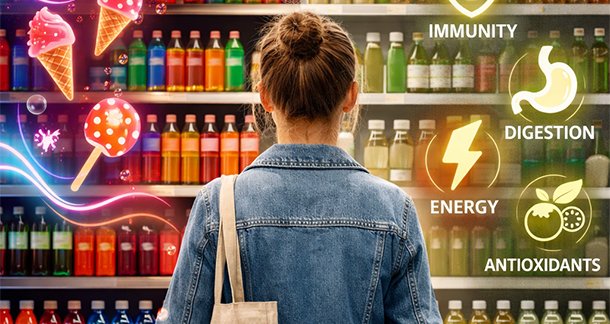
- Health Consciousness: Consumers increasingly seek beverages with benefits such as improved digestion, immunity, and cognitive performance.
- Product Innovation: Advances in formulations enriched with probiotics, adaptogens, vitamins, and minerals fuel consumer interest.
- Generational Influence: Millennials and Gen Z show stronger preference for wellness-oriented beverages aligned with their values (Dimitrova and Ilieva, 2023).
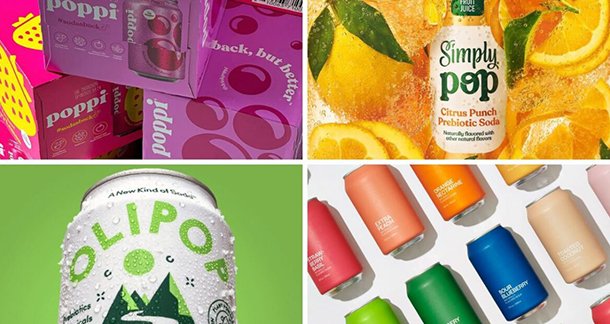
- Strategic Acquisitions: Multinational corporations are diversifying their portfolios through functional beverage acquisitions—for example, PepsiCo’s purchase of prebiotic soda brand Poppi for nearly USD 2 billion reflects a growing industry emphasis on health-driven products.
Decline of Sugary Coloured Drinks: By contrast, traditional sugary coloured beverages are in decline, owing to several factors:
- Health Risks: Excessive sugar consumption is strongly linked to obesity, diabetes, and cardiovascular disease. Organizations such as the American Heart Association advocate for reduced intake (Muth et al., 2019).
- Regulatory Policies: Sugary drink taxes have curbed purchases in many regions. For example, taxes implemented across five U.S. cities led to a 33% decline in sugary beverage sales (Donnelly et al., 2021).
- Consumer Awareness: Public education campaigns and broader knowledge of the adverse health impacts of sugary drinks are encouraging consumers to seek healthier alternatives.
3. Sensory Perception and Colour Influence
3.1 Colour’s Impact on Perception
Colour is a powerful sensory cue that influences expectations and perceived flavour. Consumers frequently associate specific colours with particular tastes, which shapes their purchasing choices (Spence, 2015; Mohamed et al., 2025). For example, darker colours are often linked to stronger flavours and greater nutrient content, which can affect the acceptance of functional beverages that lack the vibrant appearance of conventional coloured drinks (Kardas et al., 2024).
3.2 Challenges for Functional Beverages
Functional beverages often derive from natural or plant-based ingredients, resulting in muted or non-traditional hues. This contrast with vividly coloured drinks can hinder acceptance. Moreover, the benefits of functional ingredients are not always visually or immediately evident, creating an educational gap for consumers.Overcoming these hurdles requires targeted marketing, innovative use of natural colourants, and product design strategies that balance sensory appeal with health positioning.
4. Strategies for Encouraging Functional Beverage Consumption
4.1 Product Innovation: Developing functional beverages that visually resemble conventional coloured drinks through natural colourants and appealing packaging can increase acceptance.
4.2 Educational Marketing: Brands should emphasize transparent communication of health benefits, using digital platforms, influencer marketing, and interactive campaigns to inform and engage consumers.
4.3 Sensory Experience Enhancement: Optimizing flavour profiles and packaging aesthetics, while leveraging multisensory experiences, can enhance consumer perception and encourage trial.
Conclusion
The global beverage market is in the midst of a profound transformation as consumer preferences shift from traditional sugary, coloured drinks to health-oriented functional beverages. This change is driven by increasing awareness of diet-related health risks, regulatory pressures, and the rising influence of younger, health-conscious generations. Functional beverages, with their diverse range of bioactive compounds and health-promoting attributes, represent a growing segment that aligns with modern lifestyle demands for convenience, wellness, and sustainability.
References
- Grand View Research. (2025). Functional Drinks Market Size & Share | Industry Report 2030. Retrieved from https://www.grandviewresearch.com/industry-analysis/functional-drinks-market
- Firebelly Marketing. (2025). Gen Z Beverage Marketing: Health Trends and Social Shifts Are Transforming Tastes. Retrieved from https://firebellymarketing.com/blog/gen-z-beverage-marketing-health-trends-and-social-shifts-are-transforming-tastes/
- BMC Flavour. (2015). On the psychological impact of food colour. Retrieved from https://flavourjournal.biomedcentral.com/articles/10.1186/s13411-015-0031-3
- Sensient Food Colors. (2019). Evaluating Color’s Impact in Food and Beverages. Retrieved from https://na.sensientfoodcolors.com/industry-trends/evaluating-colors-impact-in-food-and-beverages/
- Spence, C. (2015). On the psychological impact of food colour. Flavour, 4(1), 21.
- Muth, N.D., Dietz, W.H., Magge, S.N., Johnson, R.K., American Academy of Pediatrics, Section on Obesity, Committee on Nutrition, American Heart Association, Bolling, C.F., Armstrong, S.C. & Haemer, M.A. (2019). Public policies to reduce sugary drink consumption in children and adolescents. Pediatrics, 143(4), e20190282.
- Donnelly, G.E., Guge, P.M., Howell, R.T. & John, L.K. (2021). A salient sugar tax decreases sugary-drink buying. Psychological Science, 32(11), 1830–1841.
- Mohamed Sadom, N.Z., Quoquab, F. & Mohammad, J. (2025). “Nourish to flourish”: boosting functional food and socially conscious purchase of Gen-Y and Gen-Z consumers. British Food Journal, 127(7), 2623–2642.
- Dimitrova, T. & Ilieva, I. (2023). Consumption behaviour towards branded functional beverages among Gen Z in post-COVID-19 times: Exploring antecedents and mediators. Behavioral Sciences, 13(8), 670.
Dr. C. Pandiyan, Ph.D and R.Kavitha Ph.D*
Veterinary College and Research Institute
(Tamil Nadu Veterinary and Animal Sciences University)
Namakkal – 637 002, Tamilnadu State, India
E mail ch.pandiyan@gmail.com

