
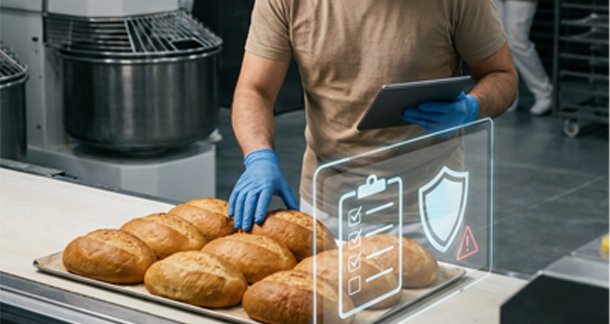
Indian bakery market is currently between USD 12–14 billion annually. Recent industry estimates place the market around USD 13–14 billion in 2024. Forecasts indicate a compound annual growth rate (CAGR) in the 9–10% range into the next decade, which would take the market beyond USD 27–31 billion by around 2033–2035 if projections hold. Aren’t promising numbers?
But at the same time, recent quality and food safety issues in the Indian bakery industry centre around foreign matters, microbiological contamination, allergen mismanagement, labelling and hygiene violations, and substandard ingredients, with several incidents leading to illness, product seizures, or regulatory action. These cases are affecting both small neighbourhood bakeries and large branded players, drawing stronger scrutiny from state food safety departments and FSSAI. Recent issues from states like Punjab, Tamil Nadu, and Karnataka have linked birthday cakes and other bakery items to suspected food poisoning, including cases involving children, prompting shop closures and police cases. Investigations in these incidents typically highlight poor handling of cream cakes, temperature abuse, inadequate hygiene, and the sale of stale or contaminated products as likely contributors. It is not only limited to local bakery shops but also big brands products like cake , cookies etc also have not performed up to the mark from quality and Food Safety POV.
These days Quality and food safety in the bakery industry are under increasing scrutiny due to evolving consumer expectations, complex supply chains, and stringent regulatory requirements and social media . Bakeries must therefore address a wide spectrum of challenges ranging from raw material variability and microbiological hazards to allergen control, foreign body contamination, labelling accuracy, and shelf-life management.
Overview of bakery quality and safety
The bakery sector covers a diverse range of products: breads, biscuits, cakes, pastries, doughnuts, cookies, snack bars, and cream- or custard-filled items, each with distinct risk profiles. Water activity in bakery products typically ranges from about 0.30 in very dry, crisp items to around 0.95 in fresh, moist products. Fresh pan bread usually has water activity around 0.90–0.95, which supports softness but also allows mold growth if not controlled by hygiene, preservatives, and packaging . Cakes and batter-type products often fall in the approximate range of 0.80–0.90, balancing moist eating quality with moderate microbiological risk.
Many products are ready-to-eat and consumed without further heating, so any lapse in control during mixing, fermentation, baking, cooling, filling, or distribution can directly translate into consumer exposure and potential foodborne illness. At the same time, competitive markets push bakeries toward higher throughput, automation, and product innovation, which can strain existing quality systems if not carefully managed.
Raw material variability and hazards
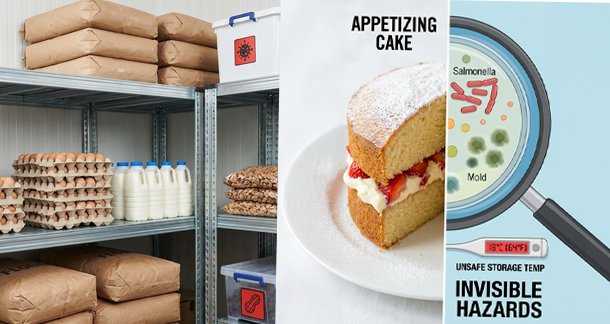
Bakery-quality flour, sugar, fats, yeast, eggs, milk, nuts, seeds, chocolate, fruits, and inclusions (e.g., choco-chips, fillings) are central to product quality but are also common carriers of microbiological, chemical, and physical hazards. Many Studies have shown that flour, dairy components, cocoa, nuts, and dried fruits can introduce pathogens including Salmonella, Bacillus cereus, Staphylococcus aureus, and Escherichia coli into bakery processes before baking. From a quality standpoint, seasonal variation in wheat, differences in flour extraction rates, and inconsistent functionality of fats and emulsifiers contribute to variation in dough rheology, loaf volume, crumb structure, and eating quality.
Suppliers may also differ in their adherence to GMP (good manufacturing practices), leading to variability in microbiological load, allergen cross-contact, and foreign matter risk. Weak supplier quality assurance and monitoring systems can therefore translate into inconsistent finished product quality and recurrent non-conformities at incoming inspection. For bakeries, robust vendor qualification, clear specifications (microbiological, chemical, physical, and functional), and periodic audits are critical first barriers for both quality and safety.
Microbiological risks in bakery products
Although baking provides a significant lethality step, not all bakery products are safe by default because recontamination and post-bake handling can reintroduce pathogens. Research on ready-to-eat bakery items, including cream-filled cakes and pastries, has reported contamination with pathogens such as Salmonella spp., Staphylococcus aureus, Bacillus cereus, and coliforms, often attributed to poor handling, inadequate hygiene, or temperature abuse. Creams, custards, milk-based fillings, and whipped toppings are particularly susceptible due to high water activity, rich nutrient composition, and often limited subsequent heat treatment.
Spoilage organisms, including molds and yeasts, also pose significant quality challenges, leading to visible spoilage, off-Odors, textural deterioration, and shortened shelf life. For sliced bread and high-moisture bakery products, mold growth is a key limiting factor, influenced by flour quality, water activity, packaging integrity, and hygienic design of cooling and slicing areas. Where environmental control and sanitation are weak, issues like rope spoilage caused by Bacillus species can emerge, resulting in unacceptable texture and flavor while also presenting potential safety concerns.
Allergen management and labelling
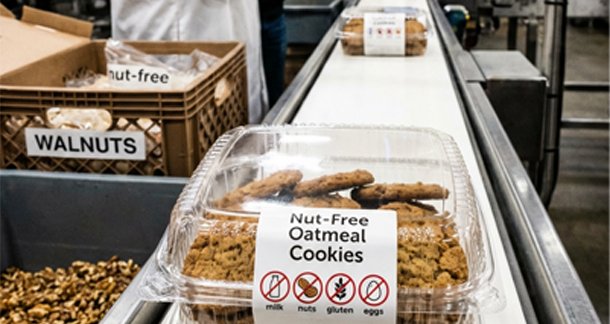
Bakery environments typically handle multiple allergenic ingredients such as wheat (gluten), eggs, milk, soy, nuts, peanuts, sesame making cross-contact a central challenge. Shared equipment, multi-product lines, and open handling of toppings and inclusions increase the risk that allergen residues transfer to products that are not intended to contain them, potentially leading to severe reactions in sensitive consumers. From a quality system perspective, inadequate cleaning validation, poor segregation, and unclear changeover procedures often sit at the root of allergen-related incidents.
Labelling errors are a major driver of bakery and snack product recalls, frequently due to undeclared allergens, incorrect ingredient lists, or misapplied labels during packaging operations. With frequent recipe changes, promotional packaging, and line speed pressures, the risk of mislabelling increases unless there are strong verification controls, line clearance practices, and electronic checks. Effective allergen management in bakeries therefore demands rigorous risk assessment, validated cleaning, dedicated utensils and storage where feasible, and robust artwork, label control, and pre-release review processes.
Foreign body contamination and equipment issues
Bakeries face substantial risk from physical contaminants introduced via raw materials or generated within the plant by equipment wear and poor maintenance. Common foreign materials include metal fragments from bearings, screws, or blades; hard plastic pieces; stones or pits from fruits and nuts; shell fragments; and packaging materials. As many bakery lines run for extended periods to maximize throughput, fatigue and wear on conveyors, mixers, depositors, and slicing equipment increase the likelihood of fragments entering the product stream if preventive maintenance is not robust.
Detection and rejection systems such as metal detectors, X-ray units, and vision inspection are now standard in modern bakeries but are only effective when properly specified, validated, and routinely challenged. Inadequate sensitivity settings, blind spots in product presentation, and lack of documented verification can give a false sense of security, causing foreign body incidents that damage brand reputation and trigger recalls. Additionally, even non-hazardous foreign materials such as burnt particles, old dough residues, or lubricant droplets can cause serious quality complaints and erode consumer trust.
Author of this article is
Anurag Mishra
Quality and Food Safety Professional, can be reached out @ Anurag.ft@gmail.com

