
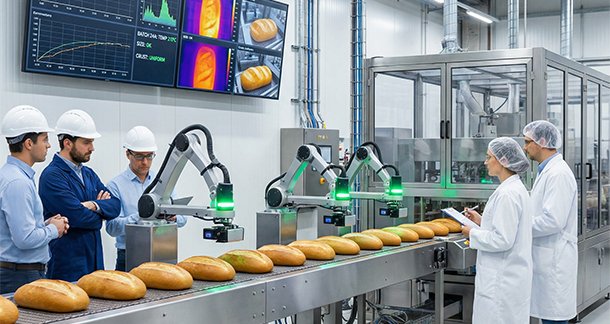
Effective control of hygiene and environmental conditions is fundamental to both quality and food safety in bakeries. Open product areas—such as dough make-up, proofing, cooling, slicing, and packing—are particularly vulnerable to airborne contamination, condensation, and cross-traffic from personnel and equipment. Where zoning between raw and finished product areas is weak, there is potential for transfer of pathogens and spoilage organisms via tools, trays, trolleys, or uniforms, undermining the protective effect of baking.
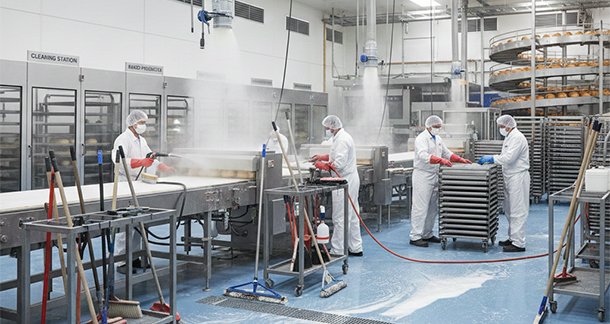
Sanitation challenges in bakeries often include complex equipment with niches, difficult-to-clean conveyors, and the presence of flour dust and sticky batters that make thorough cleaning laborious. Inadequate cleaning frequency, lack of documented cleaning procedures, and insufficient verification (e.g., ATP testing, microbiological swabs) can allow biofilms and persistent contamination to remain in the environment. Furthermore, poor integrated pest management in storage and production areas contributes both to physical contamination (insects, droppings) and to reputational damage, especially in retail bakery settings.
Integrated Pest Management
Integrated pest management (IPM) in bakeries is a preventive, systems-based approach to controlling insects, rodents, and other pests while minimizing chemical use and protecting food safety. It is a mandatory pillar of GMP and HACCP, since pests can introduce pathogens, allergens, and foreign bodies into flour, finished products, and packaging areas.IPM in bakery facilities is built on proactive inspection, sanitation, exclusion, and targeted intervention rather than routine blanket spraying. The bakery owns the program and works in partnership with a licensed pest control provider to design a site-specific plan that covers raw material storage, production, utilities, and external areas.
Temperature control, storage, and shelf life
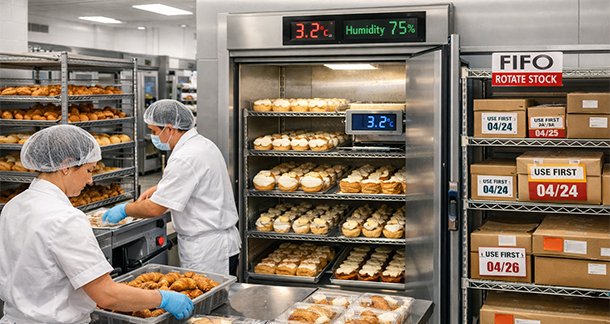
Many bakery products are temperature-sensitive, particularly those with high moisture, fillings, or toppings, yet are often displayed at ambient conditions for extended periods. Improper cooling of baked items before packing can result in condensation inside packaging, creating localized high-moisture zones that promote mold growth and vector for microbial spoilage. In cream- and custard-filled products, failure to maintain cold chain during storage and display can enable rapid growth of pathogenic bacteria and toxins, markedly increasing foodborne illness risk.
Shelf-life determination in bakeries is therefore not only about staling and sensory quality but also about microbiological safety limits. Estimating realistic shelf life requires challenge studies, predictive microbiology where appropriate, and ongoing verification through retention samples and market feedback. Inadequate date coding, stock rotation, and traceability can lead to sale of out-of-date products, complicate product recalls, and weaken the ability to investigate customer complaints.
Process control and product consistency
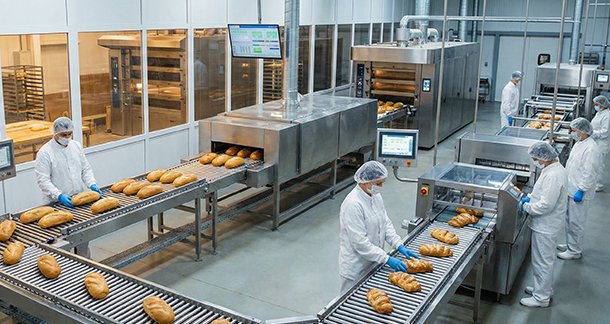
From a quality perspective, bakeries often struggle with inconsistent product characteristics such as loaf volume, crumb texture, crust color, spread of cookies, and symmetry of cakes due to variation in raw materials, equipment performance, and operator practices. Lack of standardized recipes, insufficient control over mixing times, dough temperatures, proofing conditions, and baking profiles can all lead to batch-to-batch variability and high levels of wastage or downgrades. In smaller or semi-automated bakeries, heavy reliance on operator judgement without strong training or documented process parameters further increases variability.
Modern bakeries are increasingly adopting Total Quality Management (TQM), Six Sigma, and statistical process control tools to reduce defects and achieve greater consistency. Vision-based systems and inline sensors can help monitor product attributes such as size, color, and topping distribution in real time, enabling corrective action before large quantities of non-conforming product are produced. However, the effectiveness of such technologies depends on solid foundational practices: calibrated instruments, clear specifications, and robust data analysis and corrective action processes.
Retail bakeries and food safety culture
Retail bakeries and in-store bakery counters face unique challenges because of close customer interaction, small-batch production, and frequent manual handling. Staff may be multitasking between production, serving, and cash handling, increasing cross-contamination risks if handwashing and utensil hygiene are not rigorously followed. Variation in staff training, high turnover, and informal practices can result in inconsistent implementation of HACCP principles at the retail level, even when corporate or franchisor standards exist.
In such environments, food safety culture is a critical determinant of performance. When management demonstrates visible commitment—through investment in training, provision of appropriate tools, and reinforcement of good practices—compliance with hygiene, allergen management, and temperature control improves markedly. Conversely, if production targets and customer service speed are prioritized over safe practices, shortcuts can become normalized, leading to chronic non-compliance and elevated risk of incidents.
Digitalization, traceability, and regulatory pressure
Regulatory frameworks increasingly require documented food safety management systems, traceability, and, in some jurisdictions, specific controls for allergens and food defense. For bakery chains and industrial producers, managing documentation manually—covering cleaning records, temperature logs, batch traceability, and training records—can be cumbersome and prone to errors. As a result, many bakeries are transitioning to digital solutions and ERP systems that integrate production planning, quality data, and traceability to support quick response to non-conformities and potential recalls.
However, digitalization itself introduces challenges: data integrity, user adoption, and the need to design workflows that reflect actual shop-floor realities rather than purely administrative perspectives. If systems are implemented without adequate change management and training, operators may bypass or superficially complete records, undermining the value of the investment and leaving real risks unaddressed. Successful bakery quality systems therefore pair technology with robust governance, clear roles, and continuous improvement processes linked to internal audits and management review.
Strategic approaches to improvement
To address quality and food safety challenges holistically, bakeries benefit from a structured, risk-based approach grounded in HACCP and supported by strong prerequisite programs. Key levers include :strengthening supplier management; enhancing environmental hygiene and zoning; validating critical limits for baking, cooling, and storage; and tightening allergen control , Integrated pest management and labelling verification. Investment in training, competency development, and food safety culture is essential so that staff at all levels understand both the “what” and the “why” of required controls, rather than seeing them as mere paperwork.
Continuous improvement frameworks such as TQM and Six Sigma can help bakeries systematically reduce process variation, defects, and complaints while improving efficiency. By combining robust data analysis, root cause investigation, and cross-functional problem-solving, bakeries can translate regulatory compliance into a genuine competitive advantage, delivering safe, consistent, and high-quality products that meet escalating consumer expectations.
About the Author:
Anurag Mishra
Quality and Food Safety Professional, can be reached out @ Anurag.ft@gmail.com

