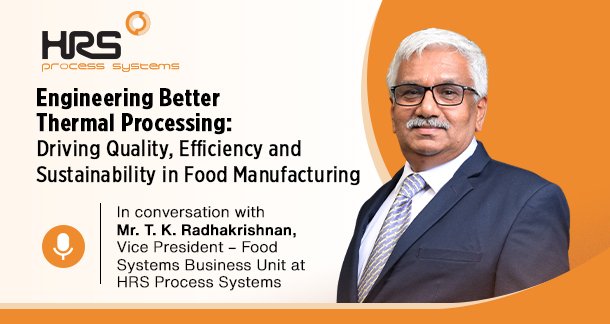
Mr. T. K. Radhakrishnan, Vice President – Food Systems Business Unit at HRS Process Systems, brings extensive experience in food processing technologies and thermal process engineering. His expertise spans thermal processing, heat transfer, evaporation, hygienic processing and process optimisation for challenging food and beverage applications. In this interview, he discusses how manufacturers can address key challenges such as fouling, product quality, energy consumption, CIP efficiency and capacity planning, while building safer, more reliable and sustainable processing operations.
- Which thermal processing problems, such as uneven heating, fouling and short shelf life, do food manufacturers struggle with most today?
The biggest challenge is that thermal processing is not simply about achieving a target temperature. Manufacturers must achieve the right combination of temperature, holding time, flow behaviour and heat transfer, while also protecting the product’s sensory and nutritional characteristics.
Uneven heating can compromise product safety and consistency, while fouling reduces heat-transfer efficiency, increases energy consumption and eventually forces production stoppages for cleaning. For products such as fruit pulps, sauces and high-viscosity beverages, these challenges become even more pronounced as viscosity, fibre content and solids concentration increase.
At the same time, manufacturers are under pressure to deliver longer ambient shelf life without compromising colour, flavour and nutritional quality. The solution therefore lies in designing the complete thermal process around the product – not simply selecting a heat exchanger based on capacity. Product rheology, particle size, fouling tendency, required lethality, residence-time distribution and cooling requirements all need to be considered together.
- How can fruit pulp and puree processors achieve commercial sterility and ambient shelf life without damaging colour and flavour?
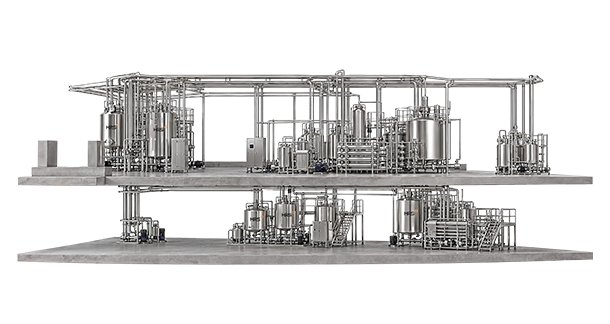
The key is to achieve the required level of microbial inactivation with the minimum practical thermal exposure. Excessive heating can negatively affect colour, flavour, texture and nutritional attributes, particularly in sensitive fruit products.
A well-designed continuous thermal process can provide precise heating and holding, followed by rapid cooling. This allows the processor to achieve the required commercial sterility while limiting the time the product spends at elevated temperatures.
Heat-exchanger selection is also critical. For products with pulp, fibres or suspended solids, the equipment must provide effective heat transfer without creating excessive shear or localised overheating. Precise temperature control, accurate holding-tube design and reliable instrumentation are equally important.
Ultimately, the objective is not simply a high processing temperature. It is controlled lethality with minimum product damage, validated for the specific product and process conditions.
- How can juices and purees be concentrated to a higher Brix with low aroma loss and low steam consumption?
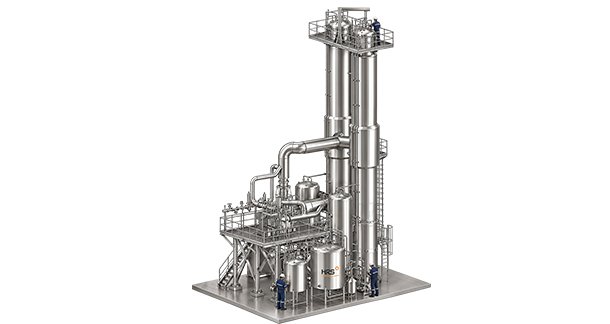
Concentration is an area where process design can make a significant difference to both product quality and operating cost. Conventional evaporation can involve substantial thermal exposure, which may lead to aroma loss and quality degradation, particularly when concentrating sensitive fruit products.
A better approach is to optimise the evaporation process around temperature, residence time, vacuum conditions, heat-transfer efficiency and vapour utilisation. Multiple-effect evaporation can improve steam economy by reusing vapour energy across successive effects.
For applications where energy efficiency is a major priority, technologies such as Mechanical Vapour Recompression (MVR) can further reduce dependence on external steam by recovering and reusing the energy contained in the vapour.
The right solution depends on the product, feed Brix, and target Brix, throughput and quality requirements. The objective should be to achieve the desired concentration with the lowest possible thermal load and energy consumption, rather than simply maximising evaporation capacity.
- High-viscosity, fibrous products foul heat-transfer surfaces and force frequent shutdowns. How can plants run longer production cycles?
Fouling is influenced by much more than the product temperature. Flow velocity, wall temperature, residence time, product composition, viscosity and heat-transfer-surface characteristics all play a role.
For high-viscosity and fibrous products, the heat exchanger must be selected and designed to maintain effective product movement and heat transfer without creating excessive pressure drop or shear. Equipment geometry, channel design and operating conditions need to be matched to the product’s rheology.
It is also important to avoid creating localised hot spots. Maintaining an appropriate temperature profile across the system can significantly reduce the tendency of the product to deposit on the heat-transfer surface.
Longer production campaigns ultimately come from a combination of product-specific heat-exchanger design, approach temperature and a well-engineered CIP strategy. The goal is to extend the time between cleaning cycles without compromising food safety or heat-transfer performance.
- How can diced fruits, vegetables and ready-to-eat preparations be pumped and heat-treated without shearing or breakage?
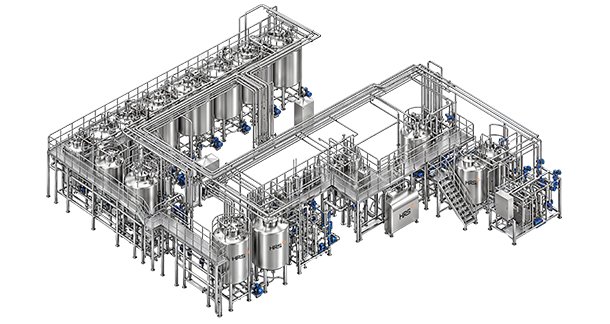
Products containing particulates require a fundamentally different approach from pump used to transfer homogeneous liquids. The objective is to move the product through the process while preserving the size, shape and texture of the individual pieces.
This starts with selecting pumps that are appropriate for the product and minimising unnecessary pressure fluctuations and mechanical stress. The piping layout should also avoid sharp changes in direction, excessive velocity and restrictive components that can damage particulates.
On the thermal side, the system needs to provide uniform heat treatment without excessive agitation or recirculation. The heat exchanger, holding system and product velocity should therefore be designed around the particle size, concentration, density and fragility of the product.
For these applications, successful thermal processing means achieving food safety while treating the product as a combination of liquid and solids- not simply as a conventional fluid.
- How can plants improve heat recovery and reduce steam, water and chemical consumption per tonne of product?
Energy and resource efficiency must be considered at the process-system level. Simply improving the efficiency of one piece of equipment may not deliver the best overall result.
A well-designed process should maximise heat recovery between hot and cold product streams wherever product quality and hygiene requirements permit. Regenerative heating and cooling can substantially reduce the amount of external steam and cooling utilities required.
Similarly, efficient CIP design can reduce water, chemicals and cleaning time by optimising flow velocity, temperature, chemical concentration and cleaning sequence. Automation helps ensure that these parameters are consistently maintained rather than depending on manual intervention.
For evaporation applications, advanced technologies such as MVR can provide another significant opportunity to reduce energy consumption.
The right metric is therefore not only equipment efficiency, but energy, water and chemical consumption per tonne of finished product. That is the metric that ultimately matters to a food manufacturer’s operating cost and sustainability performance.
- What technical parameters should a manufacturer evaluate before choosing a thermal processing system?
There are several parameters that should be evaluated, and they should be considered collectively rather than in isolation.
First is the product itself – viscosity, solids content, particle size, fibre content, pH, density, rheology and fouling characteristics. Then come the required process conditions: target temperature, holding time, required lethality, heating and cooling rates, throughput and operating range.
The manufacturer should also evaluate heat-transfer performance, pressure drop, allowable shear, and product residence time, material of construction, hygienic design and cleanability. Utility consumption, particularly steam, electricity, cooling water and CIP resources – should be assessed over the expected production cycle.
From a business perspective, factors such as footprint, automation, maintainability, uptime, future scalability and total cost of ownership are equally important.
Most importantly, manufacturers should look beyond the individual equipment item. Thermal processing is part of an integrated process, and the best solution is one that balances food safety, product quality, energy efficiency, operational reliability and lifecycle cost.
At HRS, our approach is to work backwards from the customer’s product and process requirements and engineer the appropriate solution around them. This integrated approach is becoming increasingly important as food manufacturers look for safer, more efficient and more sustainable processing operations.