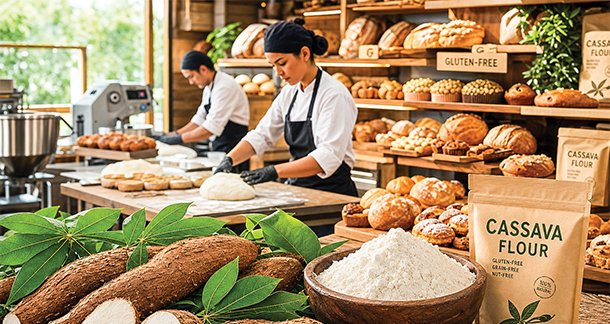
The bakery industry is constantly evolving with the introduction of innovative and nutritious ingredients that cater to changing consumer preferences. One such ingredient gaining popularity worldwide is cassava. Known for its versatility and gluten-free nature, cassava has emerged as a promising alternative to traditional wheat flour in bakery products. With increasing awareness about health and sustainable food choices, cassava is becoming an important component in modern baking.
What is Cassava?
Cassava (Manihot esculenta) is a tropical root crop cultivated extensively in Africa, Asia, and Latin America. It is a rich source of carbohydrates and provides energy to millions of people around the world. The roots are processed into flour, starch, and other products that are widely used in food industries. Cassava flour, in particular, has attracted the attention of bakers because of its excellent functional properties and ability to replace wheat flour partially or completely in various recipes.
Nutritional Value of Cassava
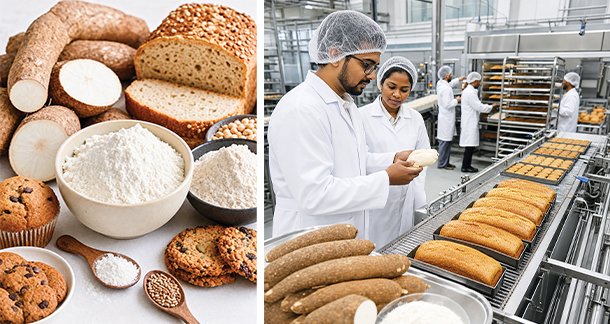
Cassava is primarily composed of carbohydrates and serves as a good energy source. It contains dietary fiber, vitamin C, calcium, potassium, and small amounts of proteins and essential minerals. Although it is lower in protein compared to wheat, cassava flour is naturally gluten-free, making it suitable for individuals suffering from celiac disease or gluten intolerance. Moreover, resistant starch present in cassava supports digestive health and contributes to maintaining a healthy gut microbiome.
Applications of Cassava in Bakery Products
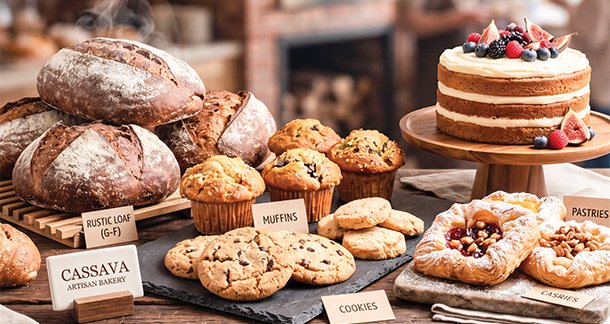
Cassava flour has found extensive applications in bakery products such as bread, cakes, cookies, muffins, biscuits, and pastries. It can be used alone or blended with wheat flour to improve texture and nutritional quality. The flour imparts a mild flavor and a soft texture, making it highly acceptable to consumers. Researchers and food manufacturers are increasingly experimenting with cassava-based formulations to develop healthier and more sustainable baked products. Cassava starch is also used as a thickening and binding agent in bakery fillings, creams, and glazes. Its ability to retain moisture helps improve the shelf life and freshness of bakery items. As a result, cassava-based products are gaining popularity in both commercial bakeries and home kitchens.
Benefits of Using Cassava in Baking
One of the major advantages of cassava flour is its gluten-free nature. With the rising prevalence of gluten sensitivity and increasing demand for allergen-free foods, cassava offers an excellent alternative to conventional flours. In addition, cassava cultivation requires relatively low agricultural inputs and can thrive in poor soils and drought-prone regions, making it an environmentally sustainable crop. Cassava flour also enhances product diversity in the bakery sector. It enables manufacturers to create innovative products that cater to health-conscious consumers. Furthermore, the use of cassava can reduce dependence on imported wheat in many developing countries, thereby supporting local agriculture and improving food security.
Challenges and Limitations
Despite its numerous benefits, the use of cassava in bakery products presents certain challenges. Since cassava lacks gluten, products made entirely from cassava flour may exhibit reduced elasticity and volume compared to wheat-based products. Therefore, blending cassava with other flours or using suitable additives is often necessary to achieve desirable texture and quality. Another important aspect is proper processing. Raw cassava contains naturally occurring cyanogenic compounds that must be adequately removed during processing to ensure safety. Advances in food technology and processing methods have significantly improved the quality and safety of cassava flour available in the market.
Future Prospects
The future of cassava in the bakery industry appears highly promising. Growing consumer demand for gluten-free, clean-label, and sustainable products is creating new opportunities for cassava-based innovations. Ongoing research is focusing on improving the functional characteristics of cassava flour and developing value-added bakery products with enhanced nutritional profiles. As the world moves toward healthier and more sustainable food systems, cassava has the potential to become a key ingredient in the bakery industry. Its versatility, affordability, and nutritional benefits make it an attractive option for both producers and consumers.
Conclusion
Cassava represents a valuable and sustainable ingredient that is reshaping the bakery sector. Its gluten-free properties, functional versatility, and contribution to food security make it an ideal choice for modern bakery applications. Although certain technological challenges remain, continuous research and innovation are paving the way for wider utilization of cassava in baked products. Incorporating cassava into bakery formulations not only promotes product diversification but also supports healthier and more sustainable food practices.
References
- Apea-Bah, F. B., Oduro, I., Ellis, W. O., & Safo-Kantanka, O. (2011). Factor analysis and age at harvest effect on the quality of flour from four cassava varieties. World Journal of Dairy and Food Sciences, 6(1), 43–54.
- Charles, A. L., Chang, Y. H., Ko, W. C., Sriroth, K., & Huang, T. C. (2005). Influence of amylopectin structure and amylose content on the gelling properties of five cultivars of cassava starches. Journal of Agricultural and Food Chemistry, 53 (7), 2717–2725.
- Falade, K. O., & Akingbala, J. O. (2011). Utilization of cassava for food. Food Reviews International, 27(1), 51–83.
- Food and Agriculture Organization of the United Nations. (2021). FAOSTAT statistical database. FAO.
- Montagnac, J. A., Davis, C. R., & Tanumihardjo, S. A. (2009). Nutritional value of cassava for use as a staple food and recent advances for improvement. Comprehensive Reviews in Food Science and Food Safety, 8 (3), 181–194.
- Sánchez, T., Salcedo, E., Ceballos, H., Dufour, D., Mafla, G., Morante, N., Calle, F., Pérez, J. C., Debouck, D., & Jaramillo, G. (2009). Screening of starch quality traits in cassava. Starch/Stärke, 61 (1), 12–19.
- Shittu, T. A., Dixon, A. G. O., Awonorin, S. O., Sanni, L. O., & Maziya-Dixon, B. (2008). Bread from composite cassava–wheat flour: Effect of baking time and temperature on some physical properties of bread loaf. Food Research International, 41 (3), 280–290.
- Tonukari, N. J. (2004). Cassava and the future of starch. Electronic Journal of Biotechnology, 7 (1), 5–8.
- Wheatley, C. C., & Chuzel, G. (1993). Cassava: The nature of the tuber and use as raw material. In C. C. Wheatley (Ed.), Cassava: Biology, production and utilization (pp. 12–24). CAB International.
About Author
Dr. Ruchi Verma1 and Dr. Suresh Chandra2
1Assistant Professor and 2Professor
1Department of Food Processing and Technology, Gautam Buddha University, Greater Noida
2Department of Processing and Food Engineering, Sardar Vallabhbhai Patel University of Agriculture and Technology, Meerut
Corresponding author mail id: ruchiverma0715@gmail.com