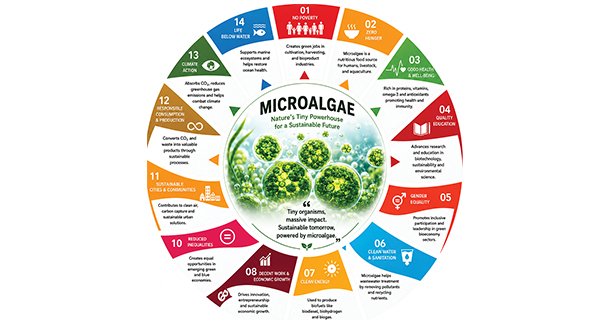
“The future of food may not come from larger farms, but from smaller organisms.”
Global population is reaching nearly 10 billion by 2050. The era of rapid urbanization, unhealthy dietary habits, changing lifestyles and increased stress has led to the prevalence of chronic diseases like hypertension, diabetes, cardiovascular disorders, and many more. As a result, consumers have become more aware of health concerns, balanced nutrition, and functional foods that enhance health care. In this aspect, nutrition plays a key role in promoting immunity, health and supporting growth with reduced disease occurrences. It is high time to look for nutrient dense sustainable foods cultivated at lower costs. Unfortunately, overgrazing, climate change, agricultural land shrinkage, rapid population growth and depletion of natural resources have made this feat even more challenging and has led to reduced availability of conventional food products as increasing demands outpace the supply.
Meet microalgae
Microalgae are microscopic, photosynthetic powerhouses found in freshwater and marine environments. With a rapid growth rate that doubles their population in just weeks, they represent a highly sustainable, potent source of protein packed with bioactive compounds and vitamins (A, B1, B2, B6, B12, C, E, niacin, nicotinate, biotin, folic acid), essential amino acids, polyunsaturated fatty acids, minerals, carotenoids, enzymes and fibre which could be used as food and feed. Although invisible to naked eyes, these tiny packages have now become “superfood” and holds potential for wastewater treatment by adsorbing heavy metal ions and utilising the nitrogen and potassium in wastewater as nutrients. Moreover, it is also free from ethical concerns and do not require fertile lands and huge investments on production. It can be cultivated on variety of substrates like manure and food industry effluents, thus utilising waste and maintaining sustainable circular bioeconomy with an ecofriendly approach.

Microalgae and the nutraceutical Revolution
The nutraceutical industry is now growing rapidly as consumers become increasingly health-conscious and seek natural products that support wellness. The U.S Food and drug administration (FDA) has recognised Arthrospira sp., Chlorella sp., Dunaliella sp., and Haematococcus pluvialis as Generally Recognized as Safe (GRAS). The omega-3-fatty acids, docosahexaenoic acid (DHA) and eicosapentaenoic acid (EPA) which are found in fishes actually originated from microalgae. Fish consume microalgae directly or indirectly through aquatic food chain. Chlorella, the detox specialist is valued for its high chlorophyll content and is frequently used in detoxification and wellness products for reducing oxidative stress. Another remarkable species, H. pluvialis, produces astaxanthin (Nature’s red diamond), which is valued at approximately US$ 6,000–7,150 per kg and is one of the most powerful natural antioxidants (also known as king of antioxidants). Astaxanthin is being used in nutraceutical formulations aimed at promoting skin health, reducing oxidative stress, and supporting cardiovascular functions. Spirulina known to be nature’s protein factory being rich in protein, iron, phycocyanin and containing 75-80% protein compared to 35-40% in soyabean, is one of the most widely consumed supplements in the world. Scientists are investigating their use in space missions because they can recycle carbon dioxide, produce oxygen and thereby, generate nutrient-rich biomass. If microalgae can help sustain astronauts on future journeys to Mars, they can certainly contribute to healthier diets here on Earth. Not only are microalgae emerging as a future foods and nutraceutical powerhouse but they are also vital for sustaining life on Earth. Scientists estimate that microalgae contribute nearly 50% of the planet’s oxygen production, generating every second breath we take. Their extraordinary ability to capture carbon dioxide and release oxygen has even inspired innovative technologies such as the “Liquid Tree”. All these benefits make microalgae the ‘green-gold of the future’.
Liquid tree developed by the University of Belgrade, Serbia (left) and the algae tree developed at Madhya Pradesh, India (right)
Conclusion
Despite, having enormous benefits, microalgae have not become a mainstream food item. This could potentially be due to high processing cost, harvesting difficulties and consumer acceptance. Some microalgal products also possess strong colors or flavors that may not appeal to all consumers. However, advances in biotechnology, cultivation systems, and food processing techniques are steadily overcoming these limitations. Researchers worldwide are developing cost-effective methods for large-scale production and exploring innovative ways to incorporate microalgae into foods such as bread, pasta, dairy products, beverages, and nutritional supplements.
About the Authors
Laveena Sambhwani1, Kajal Singh2, Mansi Sharma3, Ayon Tarafdar 1*
1Livestock Production and Management Section, ICAR-Indian Veterinary Research Institute, Izatnagar, Bareilly, Uttar Pradesh, India
2 Veterinary Pharmacology, ICAR-Indian Veterinary Research Institute, Izatnagar, Bareilly, Uttar Pradesh, India
3 Veterinary Microbiology, ICAR-Indian Veterinary Research Institute, Izatnagar, Bareilly, Uttar Pradesh, India
*Corresponding author email: ayontarafdar@gmail.com