The global meat industry is undergoing a rapid technological transformation driven by increasing consumer demand for safe, nutritious, minimally processed, and high-quality meat products. Rising concerns regarding foodborne diseases, product shelf life, environmental sustainability, and supply chain transparency have accelerated the development of innovative preservation and processing technologies. Conventional thermal processing techniques, although effective in microbial destruction, often compromise the sensory characteristics, nutritional value, and physicochemical properties of meat products. Consequently, modern food engineering and biotechnology have introduced advanced non-thermal preservation methods, intelligent packaging systems, automation technologies, and digital traceability tools that collectively enhance food safety, product stability, and industrial efficiency while maintaining product quality.
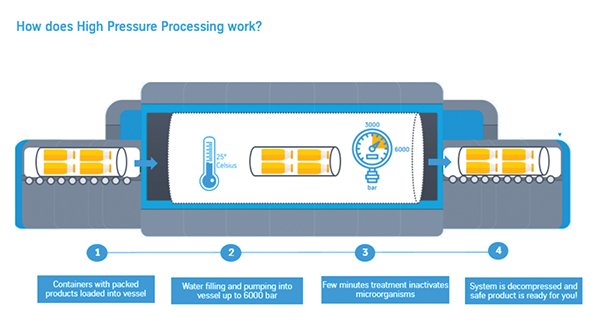
Among the most advanced non-thermal preservation technologies is High-Pressure Processing (HPP), also known as high hydrostatic pressure treatment. This technology utilizes extremely high pressures ranging from 100 to 600 MPa to eliminate pathogenic and spoilage microorganisms in packaged food products. The pressure is transmitted uniformly through a liquid medium, generally water, causing disruption of microbial cell membranes and metabolic systems without the use of heat. Unlike conventional thermal treatments, HPP effectively preserves the nutritional composition, natural pigments, flavor compounds, and texture of meat products. It has shown remarkable effectiveness against pathogens such as Listeria monocytogenes, particularly in ready-to-eat meat products. Despite its numerous advantages, HPP may induce protein denaturation, lipid oxidation, and textural modifications at very high-pressure levels. Furthermore, the high cost of equipment installation and maintenance remains a major limitation for large-scale industrial adoption.
Pulsed Electric Field (PEF) technology is another emerging non-thermal technique gaining considerable attention in meat processing industries. PEF involves the application of short-duration, high-intensity electrical pulses, generally ranging between 10 and 80 kV/cm, to food products. The mechanism of microbial inactivation is based on electroporation, where microbial cell membranes develop pores due to electrical stress, leading to irreversible cellular damage and microbial death. In meat systems, PEF not only enhances microbial safety but also improves tenderness by altering muscle microstructure and stimulating enzymatic activity associated with meat aging. Additionally, the technology enhances mass transfer during curing, brining, and marination processes, resulting in improved flavor penetration and product uniformity. Since the process generates minimal heat, the nutritional and sensory properties of meat remain largely unaffected. However, challenges associated with the heterogeneous electrical conductivity of meat tissues and industrial scalability continue to restrict its commercial implementation.
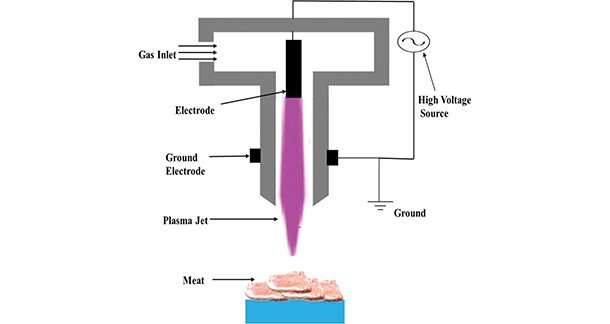
Cold plasma technology has emerged as an innovative surface decontamination method in modern meat preservation. Cold plasma consists of partially ionized gases containing reactive oxygen species (ROS) and reactive nitrogen species (RNS), which exhibit strong antimicrobial activity against bacteria, fungi, and viruses. These reactive species interact with microbial proteins, lipids, and nucleic acids, resulting in cellular damage and microbial inactivation. One of the major advantages of cold plasma treatment is its ability to preserve the sensory and nutritional quality of meat products because of its low-temperature operation. In addition to microbial control, cold plasma has demonstrated effectiveness in degrading pesticide residues and preventing biofilm formation on food-contact surfaces, making it highly valuable in food safety applications.
Advanced packaging innovations such as active and intelligent packaging systems have further improved food preservation and monitoring. Active packaging systems interact directly with the food product or its environment to enhance shelf life by incorporating oxygen scavengers, antimicrobial agents, moisture absorbers, and carbon dioxide emitters. Antimicrobial packaging films containing natural bioactive compounds and nanomaterials have shown substantial effectiveness in controlling microbial growth in meat products. On the other hand, intelligent packaging systems provide real-time information regarding product quality and freshness through biosensors, gas indicators, and time-temperature monitoring devices. These technologies enable continuous monitoring of spoilage conditions and storage environments, thereby improving food safety management, reducing food waste, and enhancing consumer confidence.
The incorporation of automation and artificial intelligence (AI) has revolutionized meat processing industries by improving precision, consistency, and operational efficiency. Automated systems are extensively used in slaughtering, deboning, cutting, grading, and packaging operations, reducing labor dependency and increasing productivity. AI-based technologies, particularly machine vision systems and deep learning algorithms, are capable of evaluating meat quality parameters such as color, marbling, texture, and fat distribution with high accuracy. These technologies facilitate objective quality grading, process optimization, and real-time defect detection, thereby minimizing production losses and improving product standardization.
Furthermore, digital traceability systems have become essential components of modern meat supply chains. Technologies such as Radio Frequency Identification (RFID), blockchain, and the Internet of Things (IoT) allow continuous monitoring and tracking of meat products from farm to consumer. These systems enhance transparency, support rapid identification of contamination sources, and improve recall management during food safety incidents. In addition, sensor-based monitoring systems continuously measure environmental and product-specific parameters such as temperature, humidity, pH, and microbial activity during storage and transportation. Such digital integration strengthens quality assurance systems, regulatory compliance, and consumer trust.
In conclusion, advanced technologies in meat processing and preservation are significantly transforming the global meat industry by enhancing microbial safety, extending shelf life, improving product quality, and increasing processing efficiency. Non-thermal preservation methods, innovative packaging systems, AI-driven automation, and digital traceability technologies collectively contribute to the development of safer, more sustainable, and technologically advanced meat production systems. Although limitations related to cost, scalability, and consumer acceptance still exist, continuous scientific advancements and technological innovations are expected to accelerate the future adoption of these emerging technologies across the food processing sector.
References
• Balasubramaniam, V. M., Barbosa-Cánovas, G. V., &Lelieveld, H. (2015). High-pressure processing of food. Food Engineering Reviews, 7(1), 1–20.
• Barba, F. J., et al. (2015). Pulsed electric fields processing of foods. Food Research International, 77, 773–798.
• Campus, M. (2010). High pressure processing of meat products. Meat Science, 86(1), 216–223.
• Farkas, J., & Mohácsi-Farkas, C. (2011). History and future of food irradiation. Trends in Food Science & Technology, 22(2–3), 121–126.
• Kamruzzaman, M., et al. (2016). Machine vision systems in meat quality evaluation. Critical Reviews in Food Science and Nutrition, 56(1), 1–14.
About the Authors
1Lavika Tomar and *Dr. Asha Kumari
1*Department of Food Processing and Technology, Gautam Buddha University, Greater Noida, India -201312
Corresponding Author: kumariasha9019@gmail.com