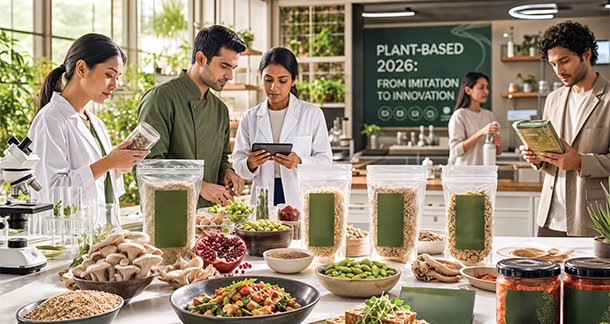
The plant-based food industry is undergoing a quiet but profound transformation in 2026. No longer content with simply swapping meat for a soy patty, consumers and manufacturers alike are rethinking what plant-based truly means , shifting the conversation from clever imitation to genuine nutrition, authenticity, and function.
A Market Coming of Age
The global plant-based market is on track to hit $21.23 billion by the end of 2026, driven by consumers demanding clean labels, whole-food proteins, and ingredients that support gut health, fiber intake, and heart-conscious eating. This growth is not fuelled by novelty alone. The ingredients market for plant-based food and beverages, valued at $2.3 billion in 2023, is projected to surge to $9.30 billion by 2033, growing at a CAGR of 15%.
Meati Foods
The “Authentic Plant-Based” Movement
The defining theme of 2026, according to Innova Market Insights, is “Authentic Plant-Based.” This trend emphasizes continued interest in the plant-based market, but rather than mimicry, consumers are seeking products that support holistic well-being. Plant-based is moving away from imitation towards increasing nutritional value and naturalness.

Innova’s research indicates that 55% of consumers agree that plant-based foods should be considered as their own category, and 64% of global consumers agree that plant-based products should be made with less processing. This has prompted brands to shorten ingredient lists, use recognizable components, and in some cases, feature the number of ingredients directly on packaging as a trust signal.
Proteins Get a Whole-Food Makeover
Protein remains at the heart of innovation, but the sources and formats are evolving fast. Edamame, quinoa, and fungi-based proteins are leading growth by delivering nutrition with recognizable ingredients, and interest in textured, sensory-rich foods is up 44% year-over-year.
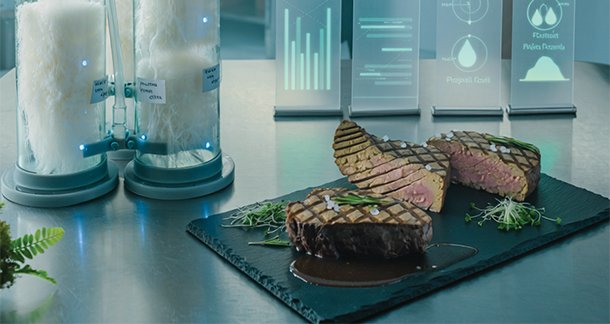
Mycelium , the root-like network of fungi , is emerging as one of the most promising ingredients of the year. Mycelium delivers complete protein with all nine essential amino acids, uses significantly less land and water than conventional beef, and contains no cholesterol or saturated fats.
Meanwhile, plant-based milk brands are debuting high-protein innovations, with some delivering the highest protein content of any plant-based beverage on shelves, alongside growing interest in whole-ingredient soy and oat-based formulations.
Beyond Protein: Fiber, Sweeteners, and Functional Ingredients
Beyond protein, there is growing demand for plant-derived fibers and sweeteners, transforming product formulations for health-conscious and sustainability-driven consumers. Companies are pioneering innovations with ingredients such as stevia, apple extract, and chicory root fibers to address taste, texture, and health needs.
Fiber is expected to receive even more attention in 2026, with rising demand being driven by increasing consumer awareness of digestive health, weight management, and preventive healthcare.
GLP-1 Medications Are Reshaping the Category
An unexpected force shaping plant-based ingredient formulation in 2026 is the mainstream adoption of GLP-1 weight-loss medications like Ozempic. These medications have created a demographic with a specific need for nutritional density, making macronutrients like protein even more critical and driving plant-based products toward higher protein, lower sugar, and increased fiber content.
Global Flavors Take Centre Stage
Middle Eastern flavors are anticipated to dominate food trends in 2026, with ingredients like harissa, pomegranate, pistachio, and za’atar described as versatile, recognizable, and easy to integrate across snacks, sauces, meals, and beverages. Korean ingredients are also surging, with K-food crossovers finding growing presence in the plant-based freezer aisle globally.
Hybrid Products Bridge the Gap
Brands like Perdue and Better Meat Co. now blend meat with mushrooms or soy to create better texture, fewer calories, and a lighter environmental impact, hybrid products that appeal to the majority of consumers who do not want to give up meat entirely but are open to reducing it.
The Road Ahead
Companies are innovating with natural ingredients, organic sources, and non-GMO formulations as consumer scrutiny of labels intensifies. The plant-based category in 2026 is no longer a niche ideology , it is a mainstream, science-backed, and flavour-forward movement redefining how the world eats.
Sources:
Innova Market Insights , Tastewise , GlobeNewswire / ResearchAndMarkets ,Meati, FoodNavigator, USA, Food Ingredients First , VegNews, Future Market Insights