In conversation with T. K. Radhakrishnan, VP , Food Systems at HRS Process Systems Ltd, shares the company’s two-decade journey from heat exchanger manufacturing to delivering customised, energy-efficient, and hygienic solutions for diverse F&B segments worldwide.
Question- How has the trajectory of HRS been so far in the F&B Industry and what are the lessons that you have cultivated over the years?
The journey of HRS in the food and beverage (F&B) industry has been both strategic and rewarding. Over the last two decades, we’ve transitioned from being a heat exchanger manufacturer to a comprehensive solution provider for thermal processing in food. Our systems now cater to fruit processing, tomato processing , ketchup processing, beverage processing, dairy pasteurisation, UHT systems for Dairy & Non- dairy products and the concentration of sensitive food products.
A key lesson we’ve learned is that no two food process are alike. Each product—be it a dairy beverage or a tomato paste has unique processing needs. This has pushed us to adopt a highly customised, engineering-first mindset.
Another major learning has been the importance of collaboration with customers, regulatory bodies, and academic partners to stay ahead of evolving standards in hygiene, automation, and sustainability. This collaborative approach has been instrumental in shaping reliable and forward-thinking systems.
Question- HRS tailors heat exchangers and complete systems for dairy, beverages, prepared foods, and more. How do you ensure your technology meets the unique hygiene, energy-efficiency, and taste-quality demands across such diverse F&B segments?
Meeting the distinct requirements of varied F&B segments begins with process understanding. For example, dairy needs gentle heat treatment to preserve proteins, while fruit pulp requires sterilisation without degrading colour or flavour.
We address this through our modular system design approach, using a mix of tubular, corrugated tube, and scraped surface heat exchangers, each selected based on the product’s rheology, temperature profile, and particulate size.
Our systems strictly adhere to GMP and EHEDG design principles. Internally polished surfaces, CIP compatibility, aseptic sealing, and hygienic welding ensure food safety.
We also integrate energy recovery modules, optimising heat exchange to reduce utility costs up to 95%. With every system we deliver, our goal is to balance safety, efficiency, and product integrity, regardless of the segment.
Question- It is highlighted that HRS engineers customize solutions, from scraped surface units to aseptic fillers. Could you share the R&D journey behind a recent innovation and its impact on a major F&B customer?”
A recent innovation that stands out is the development of an integrated system for sterilising and aseptically filling mango pulp with suspended fibres—a technically challenging task due to the product’s viscosity and particulate content.
Traditional tubular systems couldn’t handle the pulp-fibre matrix effectively. Our R&D team re-engineered the HRS Rotary scraped surface heat exchanger, optimising the scraping mechanism and heat transfer area to handle this viscous load without damaging the fruit fibres.
This system was implemented at one of India’s largest pulp exporters. The result? Reduced processing time by 20%, energy savings of 25%, and enhanced product shelf life without preservatives.
This project is a classic example of how our R&D is application-driven, not just technology-driven, ensuring real-world outcomes for the customer.
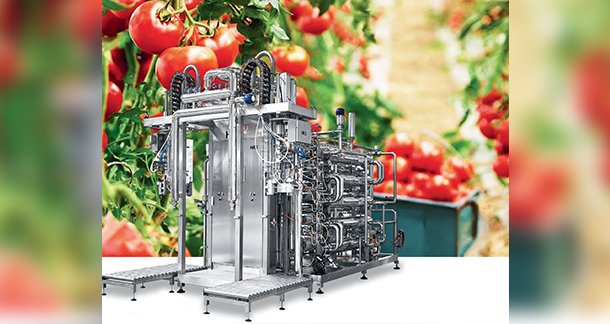
Question- Food producers face rising energy costs and waste reduction pressures. How does HRS’s heat recovery technology help them achieve cost savings and sustainability goals?”
Energy is a critical operational cost in food processing. Our heat recovery systems use innovative counter-current designs and corrugated tubes to maximise heat transfer even at low temperature differentials. This allows us to recover up to 90% of input thermal energy, translating to significant reductions in utility consumption.
In evaporation systems, we apply Mechanical Vapour Recompression (MVR) which can cut energy usage by more than 50% compared to conventional setups, which can reduce further operation cost by 50%
Waste reduction is another key pillar. Our designs focus on reducing hold-up volume, optimising CIP cycles, and improving product recovery, ensuring minimal wastage at every stage. This not only helps our clients cut costs but also aligns with their ESG goals and sustainability reporting.
Question- HRS partners with Spain’s CTNC using pilot aseptic-filling trials. What typical challenges do customers face in pilot phase, and how does this partnership translate to full-scale adoption?
Pilot trials are a critical phase, especially when launching new recipes or entering export markets. Challenges we commonly see include validating product behaviour under high temperature, ensuring homogeneous heat transfer for multi-phase products, and fine-tuning sterilisation-to-filling timing.
Our partnership with CTNC (Centro Tecnológico Nacional de la Conserva y Alimentación) in Spain allows customers to simulate real-world conditions using our pilot-scale equipment before committing to commercial investments. These trials enable fine-tuning of parameters, microbial validation, and even sample packaging for shelf-life studies.
Once proven at pilot level, the same design logic is scaled with validated parameters into a commercial system, reducing risk, downtime, and commissioning challenges. It’s a clear case of “engineer once, deploy with confidence.”
Question- Since its founding in 1981, HRS has grown into a global player with a presence in India, Spain, the US, and beyond. What is your current global expansion strategy for F&B, and how do the needs of regional market differ?
Our global strategy revolves around three pillars: localisation, vertical integration, and digital enablement. We’re expanding our footprint in Southeast Asia, Africa, and middle east, where demand for fruit-based beverages, dairy alternatives, and ready-to-eat products is surging. Here, we focus on modular, energy-efficient systems that are easy to install and maintain.
In contrast, developed markets like Europe and the US prioritise automated, traceable systems with high sanitary design and digital connectivity. Our group companies in the UK and Spain support these needs with integrated design and service.
By combining global engineering with local execution, we ensure that HRS systems are not just technologically advanced, but also market-relevant.
Question- Looking further, what are your plans for the near future? Do you have any upcoming projects lined up?
Yes, we’re actively working on several exciting projects. These include: A large-capacity processing lines for Tomato, guava, Oranage and banana pulp processing in Southern India, designed with fibre-friendly handling and MVR-based energy recovery.New modules for nutraceutical beverages, combining sterilisation and particulate retention, catering to the growing demand for functional foods.
Plant-based milk processing systems,an area where our tubular and scraped surface expertise adds immense value in terms of texture and stability.
We’re also enhancing our digital service platform, enabling remote diagnostics, performance benchmarking, and preventive maintenance alerts aligning with the needs of next-generation processors.
Looking ahead, our aim is to continue delivering customised, sustainable, and digitally enabled systems that help our customers stay competitive in a demanding market.