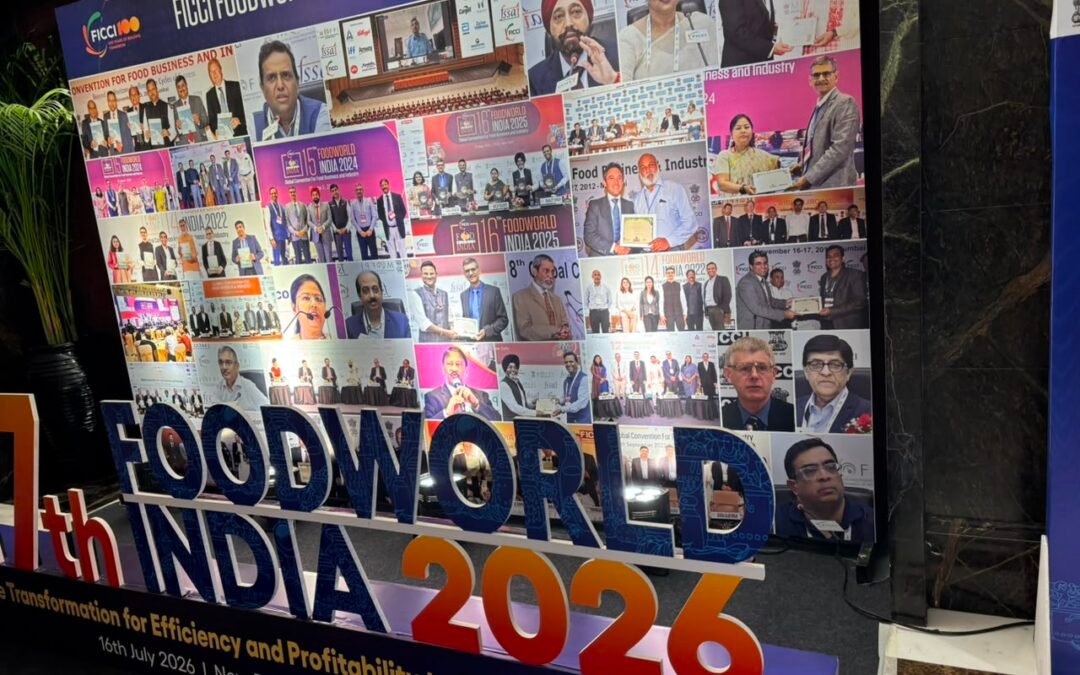
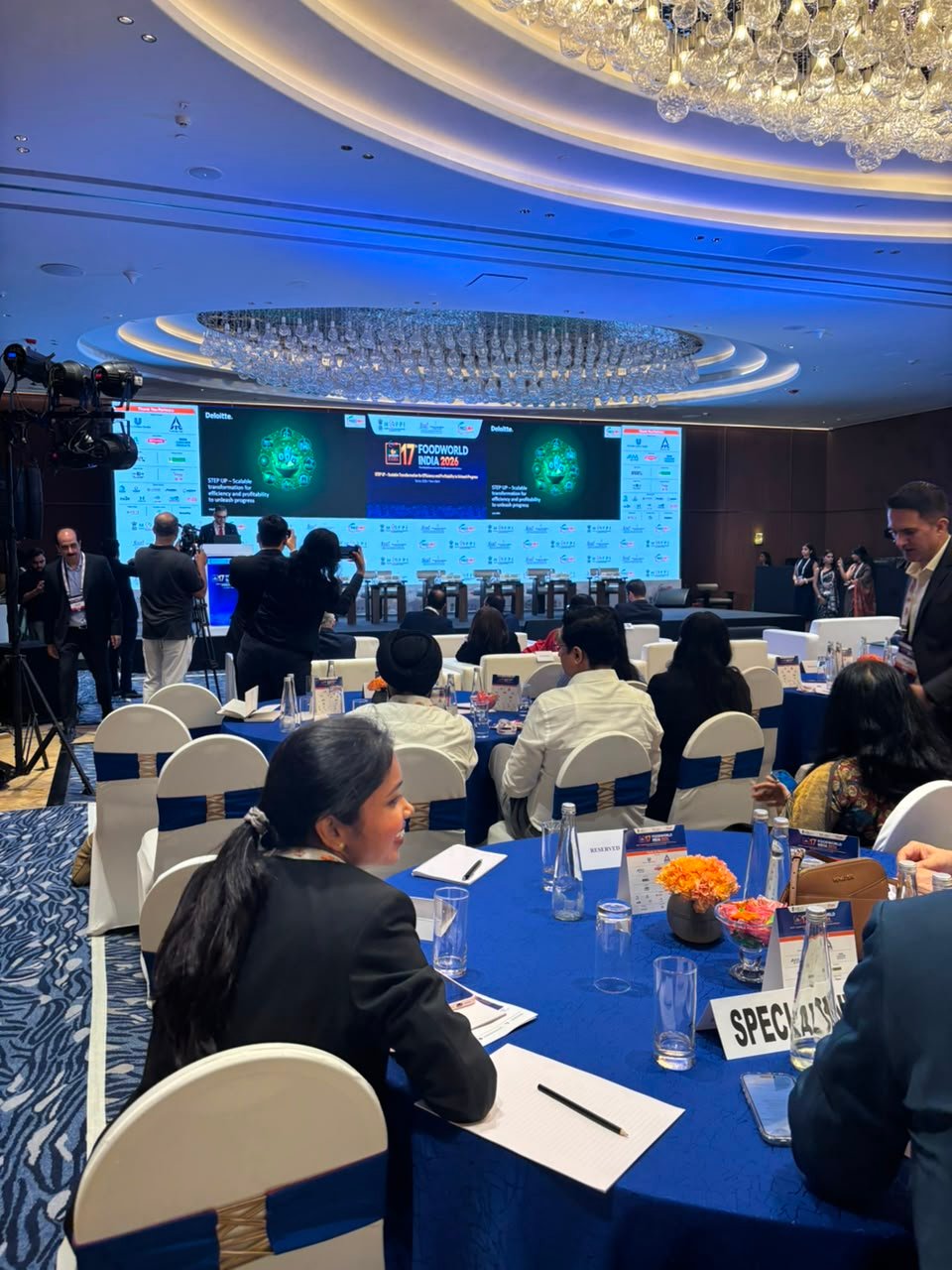
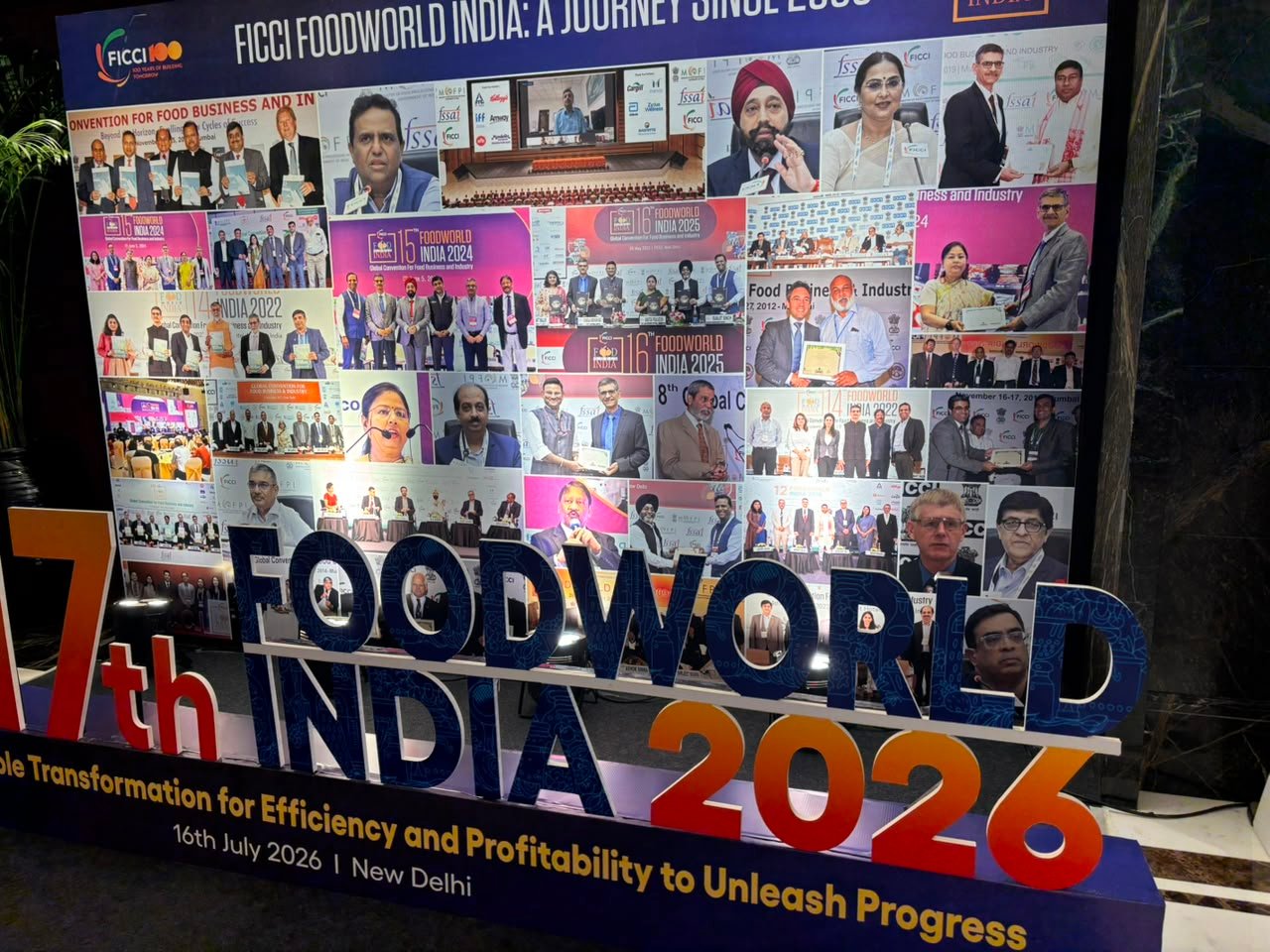
New Delhi, 16th July 2026 – The Ballroom at Shangri-La Eros was packed well before the 10 AM start, and by the time the first panel wrapped, it was clear this year’s FoodWorld India had a different centre of gravity than editions past. The 17th edition of the convention, built around the theme “STEP UP — Scalable Transformation for Efficiency and Profitability to Unleash Progress,” spent less time talking about factories and supply chains, and a lot more time talking about the consumer’s phone screen, their protein intake, and the algorithms deciding what they see next.
The day opened with welcome remarks from Hemant Malik of ITC Foods in his capacity as Chair of the FICCI Food Processing Committee, an address from FSSAI’s Dr. Satyen Kumar Panda, and a keynote from Shri Avinash Joshi, Secretary at the Ministry of Food Processing Industries. A knowledge report co-branded by FICCI and Deloitte was released alongside these remarks, and its top-line number made the rounds quickly: India’s food processing space is being positioned as a nearly $600 billion opportunity by 2030, with the processed food market alone expected to scale toward the $560–580 billion mark. The pitch, in essence, is that the sector is moving away from a volume game toward a value one, fewer commodity sacks, more branded, premium, differentiated products on the shelf.
Protein, Premiumisation, and the New Shopping Basket
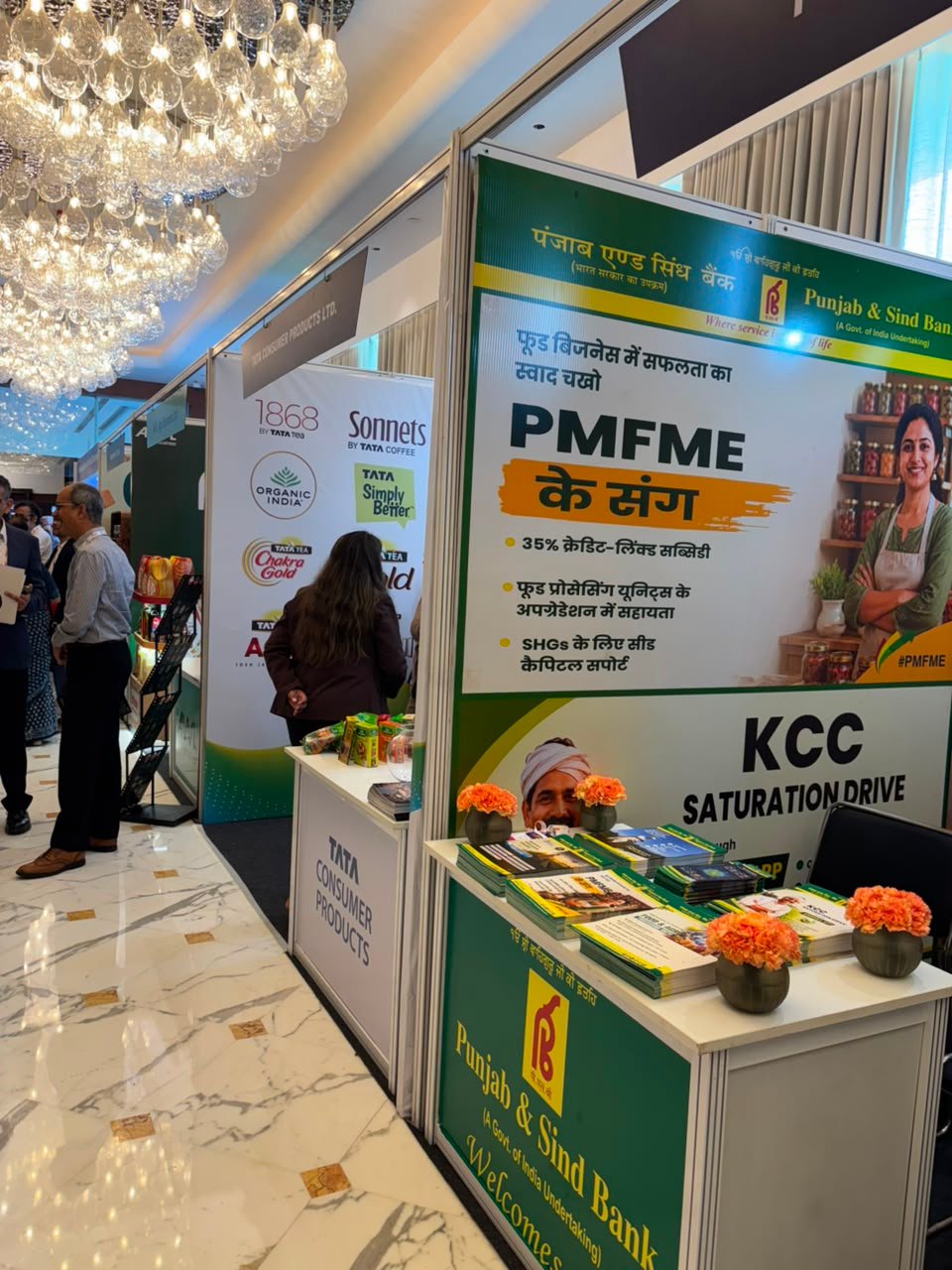
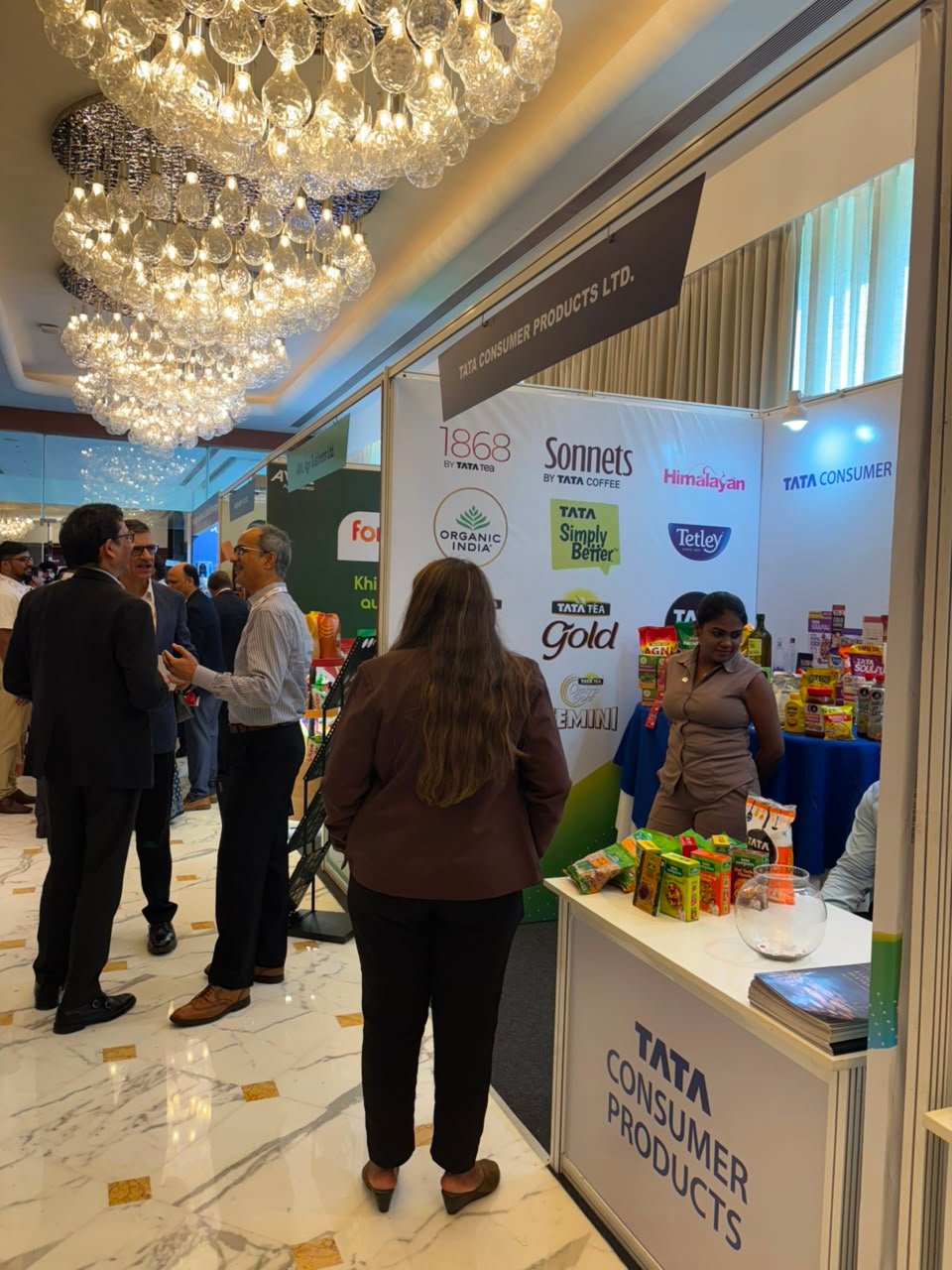
The session on the “new Indian consumer,” anchored by leaders from Tata Consumer Products, Britannia, Orkla India, Zydus Wellness and PepsiCo India, circled repeatedly around a basket that looks nothing like it did five years ago. High-protein positioning came up as one of the sharpest growth vectors in the room — no longer a niche fitness-store category, but something migrating into mainstream snacking, dairy, and packaged staples as everyday health-consciousness becomes a purchase driver rather than an aspiration. Alongside it sat a broader premiumisation story: consumers trading up for functional, convenient, and better-for-you formats, even in categories that used to compete purely on price per kilogram.
The subtext for marketers was hard to miss. When protein content, ingredient transparency, or a health claim becomes the reason someone picks one pack over another, marketing stops being about brand recall alone and starts being about credibility, claims that can survive scrutiny, and positioning that can be defended shelf by shelf, platform by platform.
Marketing in the Age of Algorithms
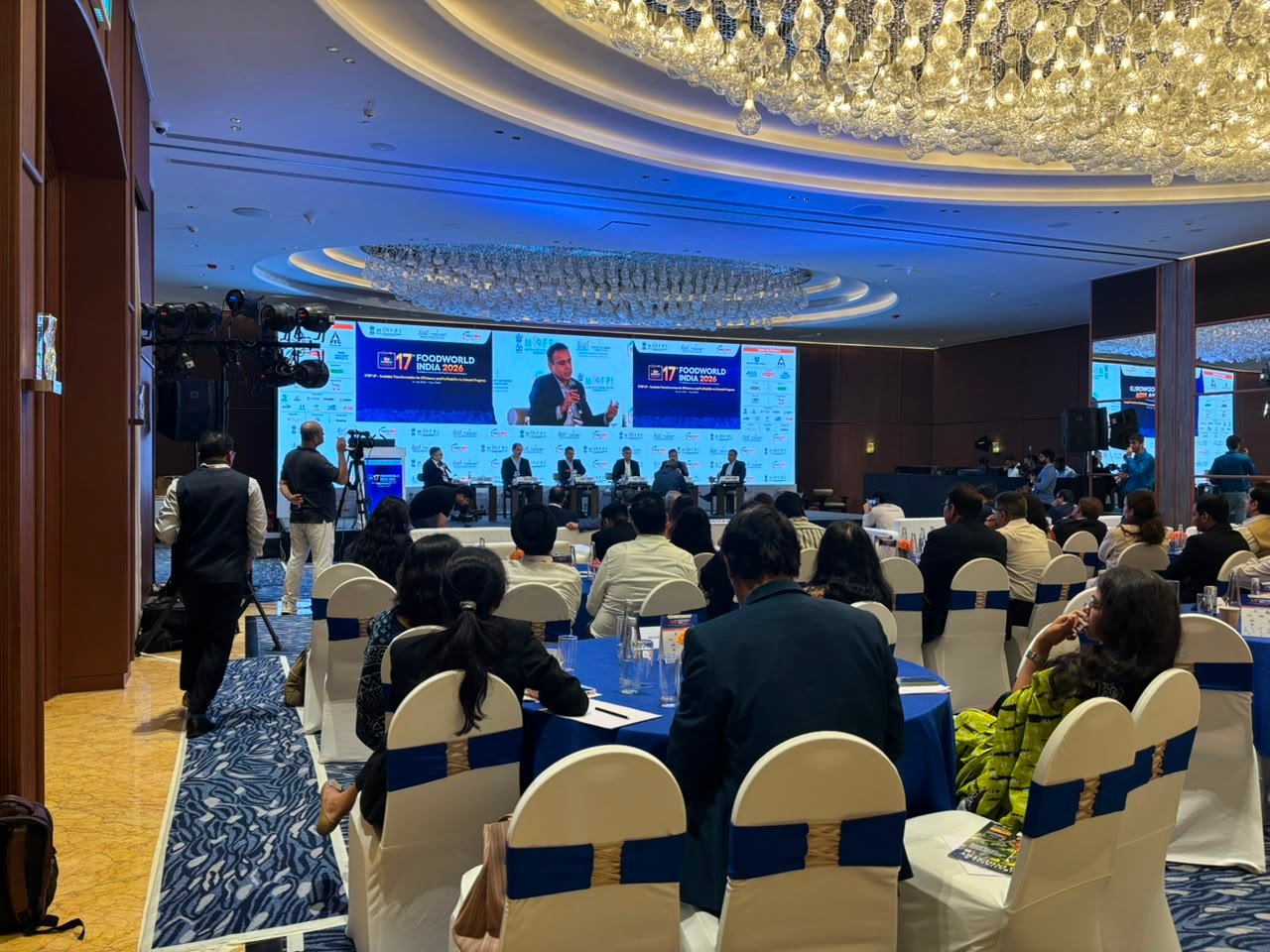
If one session captured the mood of the room, it was the one titled, pointedly, “Marketing in the era of algorithms: from reach to precision.” Executives from ITC Foods, Mars Snacking, Danone India, Mondelez, Allana, and AWL Agri Business took turns making a version of the same argument: reach used to be the goal, and now reach is table stakes. The harder and more valuable skill is precision: knowing which consumer, on which platform, at which moment, is worth the marketing rupee.
That precision is increasingly AI-assisted. Recommendation engines, predictive demand sensing, and AI-driven creative testing were discussed less as futuristic add-ons and more as operational necessities tools that decide media spend allocation in near real time rather than at the end of a quarter. The conversation also pushed marketers to think beyond the single “digital” bucket and get specific about mediums: quick commerce apps that double as discovery platforms, social commerce and influencer-led selling, retail media networks inside e-commerce marketplaces, and old-fashioned modern trade, each behaving like a distinct channel with its own algorithmic logic, not a single monolithic “online” category.
What This Means for Marketers Trying to Stay Ahead
Strip away the panel-speak, and a few practical takeaways for marketers emerge from the day’s discussions:
- Treat health claims as a marketing asset, not a footnote. With high-protein and functional positioning becoming a genuine purchase trigger, the brands that win will be the ones that can market nutrition credibly, not just print it on the back of pack.
- Build for precision, not just presence. Being everywhere digitally is no longer differentiation. The edge lies in using data and AI to identify who genuinely converts, and reallocating budgets toward those pockets faster than competitors do.
- Respect channel fragmentation. Quick commerce, social commerce, retail media, and traditional trade each reward different creative and pricing strategies. A single campaign asset repurposed everywhere is likely to underperform against channel-native content.
- Stay ahead of the compliance curve. A separate session on regulation reinforced that claims-heavy marketing , especially around health and nutrition , will face tighter scrutiny going forward, making legal and regulatory alignment a marketing input rather than an afterthought.
- Use AI as a speed advantage, not a gimmick. The sharpest comments in the room treated AI as infrastructure for faster testing and sharper targeting, not as a headline feature to bolt onto a campaign for novelty’s sake.
The Bigger Picture
FoodWorld India 2026 didn’t pretend the numbers around India’s food opportunity aren’t a good story, they are. But the more instructive part of the day was watching an industry historically anchored in production efficiency spend an entire afternoon debating consumer psychology, algorithmic targeting, and channel strategy. For marketers in food and FMCG, that’s the real signal from this year’s edition: the next phase of growth in Indian food will be won or lost not on the factory floor, but in how precisely a brand can read and respond to the consumer in front of the screen.