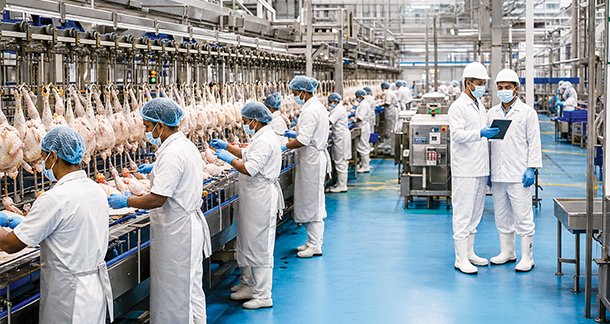
management. Raw meat and poultry naturally carry microorganisms, including dangerous pathogens such as Salmonella, Campylobacter, Listeria monocytogenes, and pathogenic E. coli.
Unlike dry food industries, poultry and meat facilities operate in wet environments with continuous water usage, organic matter accumulation, aerosols, and heavy employee movement. These conditions create ideal environments for microbial survival and spread. Even small lapses in employee hygiene or sanitation practices can rapidly contaminate processing lines and finished products.
For example, if an employee handling contaminated carcasses fails to sanitize gloves before touching clean surfaces, pathogens can spread across equipment, tools, and products within minutes. Similarly, improper segregation between dirty and clean zones may transfer contamination from live bird handling areas into high-hygiene packaging rooms.
Because of these risks, food safety culture becomes the invisible control system that supports all technical food safety measures within the facility.
Leadership: The Foundation of Food Safety Culture
Leadership commitment is one of the strongest indicators of food safety culture maturity. Employees carefully observe management behavior and priorities. If plant managers focus only on production targets, efficiency, and output volumes while ignoring hygiene violations, employees quickly understand that food safety is secondary.
On the other hand, when management actively participates in GMP inspections, discusses food safety during meetings, allocates budgets for sanitation improvements, and supports corrective actions, employees recognize that food safety is genuinely valued by the organization.
Leadership commitment is demonstrated through actions rather than slogans. For example, management must ensure:
- Adequate staffing for sanitation activities
- Sufficient downtime for proper cleaning
- Timely maintenance of damaged equipment
- Investment in hygienic infrastructure
- Continuous employee training
One of the most important aspects of leadership is creating an environment where employees can report problems without fear. In many facilities, workers hesitate to report contamination incidents, damaged equipment, or CCP deviations because they fear blame or punishment. This creates hidden risks within the operation.
Strong food safety cultures encourage open communication. Employees should feel confident reporting:
- Condensation issues
- Water leakage
- Pest activity
- Product contamination
- Equipment failures
- Hygiene non-conformities
When organizations promote transparency instead of fear, food safety risks can be identified and corrected before they become serious incidents.
Employee Behavior: The Real Frontline Control
Employees working on processing lines are the real frontline defense against contamination. Their daily actions determine whether pathogens remain controlled or spread throughout the facility.
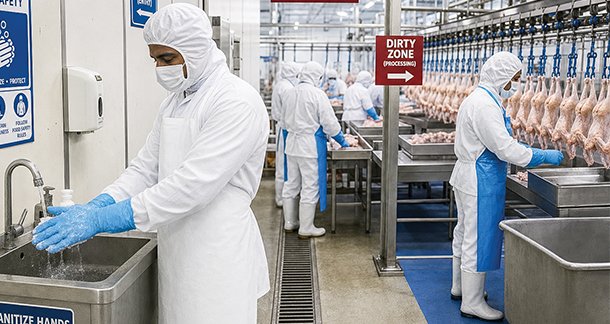
Simple practices such as hand washing, knife sterilization, PPE compliance, and hygienic handling of carcasses have a major impact on food safety outcomes. However, maintaining these practices consistently is often difficult in slaughterhouses and poultry plants because of production pressure, fatigue, repetitive work, and high labor turnover.
For example, workers performing evisceration operations may sometimes rush their tasks to maintain line speed. If care is not taken during evisceration, intestinal contents can leak onto carcasses, significantly increasing microbial contamination risks. Similarly, employees moving between dirty and clean zones without following sanitation protocols may unintentionally transfer pathogens into high-risk processing areas.
Many facilities also face challenges with temporary workers or newly recruited employees who may lack understanding of:
- Cross-contamination risks
- Hygienic zoning
- CCP importance
- Personal hygiene expectations
- Foodborne illness consequences
Therefore, employee training should not be treated as a one-time activity conducted only during induction. Continuous reinforcement through daily toolbox talks, visual demonstrations, supervisor coaching, and refresher programs is essential for maintaining awareness and discipline.
Prouction Pressure versus Food Safety
One of the most common cultural weaknesses in slaughterhouses and poultry plants is the conflict between production efficiency and food safety compliance.
During periods of high demand, facilities may prioritize throughput and operational speed over hygienic practices. Employees may skip sanitation procedures during changeovers, delay cleaning activities to reduce downtime, or continue operations despite equipment contamination concerns.
This creates dangerous conditions because microbial contamination can spread rapidly in meat processing environments. A few minutes saved in production may ultimately result in costly recalls, regulatory actions, product destruction, or damage to brand reputation.
For example, if sanitation teams are pressured to reduce cleaning time, food residues may remain inside difficult-to-clean equipment areas. These residues can support bacterial growth and biofilm formation, allowing pathogens such as Listeria monocytogenes to survive routine cleaning processes.
A strong food safety culture ensures that employees understand that production goals should never compromise product safety.
Poor Hygiene Discipline an Cross-Contamination Risks
Hygiene discipline is critical in meat and poultry processing because pathogens spread easily through direct and indirect contact. Unfortunately, many contamination events occur due to routine behavioral failures rather than technical system breakdowns.
Examples of poor hygiene discipline include:
- Inconsistent hand washing
- Improper use of gloves
- Employees touching contaminated surfaces and then handling products
- Eating or drinking in processing areas
- Poor cleaning of tools and equipment
- Uncontrolled movement between hygienic zones
In poultry facilities, water splashing and aerosol generation further increase contamination risks. If employees fail to follow hygiene procedures consistently, bacteria can spread rapidly throughout the environment.
Maintaining hygiene discipline requires constant supervision, visual reminders, strong leadership involvement, and employee accountability. Food safety culture becomes visible through everyday behaviors on the processing floor.
Conclusion
Food safety culture is the invisible force that determines whether food safety systems succeed or fail in slaughterhouses and poultry processing facilities. SOPs, HACCP plans, certifications, and advanced technologies are essential, but they cannot compensate for weak employee behavior or poor leadership commitment.
Organizations with strong food safety cultures create environments where employees understand the importance of hygiene, openly report problems, follow procedures consistently, and take personal responsibility for consumer safety.
As regulatory expectations continue to increase and consumers demand greater transparency, food safety culture will become one of the most important competitive advantages in the meat and poultry industry.
Ultimately, the safest processing plants are not simply those with the best documentation, but those where food safety becomes part of everyday behavior, decision-making, and organizational values.
Author
Ashutosh Jaiswal
Food Safety Professional
Email: ashuthewall@gmail.com