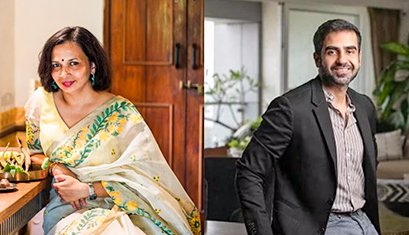
So, his overall point is to highlight India’s potential in a similar dining-out culture. The overall restaurant industry will get a significant opportunity to implement this idea on a ground level. He also addressed the country’s lack of large-scale restaurant brands.
India’s food service sector is underdeveloped, according to him, as we only have 30% of the market being organised, compared to 55% in the United States. He leveraged data from Swiggy and Bain & Company while explaining how average per-person consumption of non-home-cooked meals is lower in India (5 meals) compared to China (33), the United States (27), Singapore (19), and South Korea (14).
His statement also sparked an online debate about cultural preferences and the feasibility of such a shift in India. Many users talked about why home-cooked meals are important in Indian culture. Although dining out may increase efficiency, home cooking will remain integral to most Indians.
By contradicting Kamath’s comments, celebrity dietitian Rujuta Diwekar talked about the health benefits and familial bonding related to home-cooked meals.
So, the overall conversation showcases a very complex interplay around cultural traditions and evolving lifestyle choices.